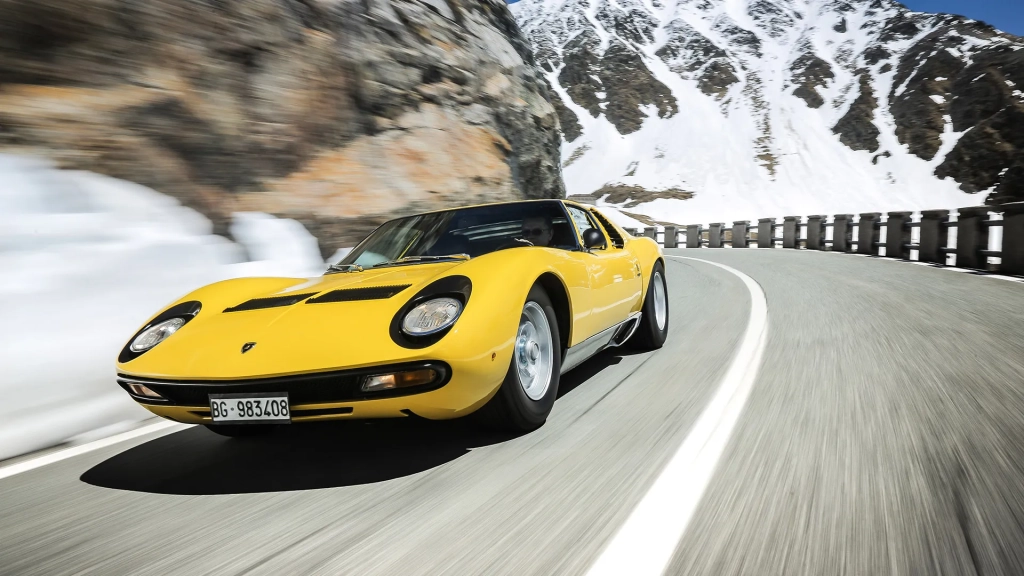
Lamborghini. Lambo. The Raging Bull.
Whichever name you choose, you will undoubtedly have used words like outrageous, ridiculous or insane to describe many of the automotive marvels that have screamed through the Sant’Agata Bolognese factory gates over the years.
But there’s a lot more to Lamborghini than just the Miura, the Countach, the Aventador. That’s what we’re here to discuss.
So strap yourself in, ‘cos it’s gonna be some journey.
First stop: The golden years, under the ownership of a certain Signor Lamborghini.

Ferruccio
Born a Taurus (it’s important, I wouldn’t normally get astrological on you) on April 28th, 1916, to grape farmers in the agricultural heartlands of Italy, Ferruccio Lamborghini’s life was a testament to boundless energy, unwavering passion, and a knack for turning dreams into reality.
His childhood spent tinkering with engines led him into a world of mechanics, which proved timely when World War II struck Italy in 1940. Just three years after the fall of the Nazi empire, in 1948, he founded Lamborghini Trattori, his first company. A successful tractor manufacturing enterprise that capitalised on Italy’s post-war economic boom, his mechanical expertise and business acumen led to the company’s rapid growth and international recognition.
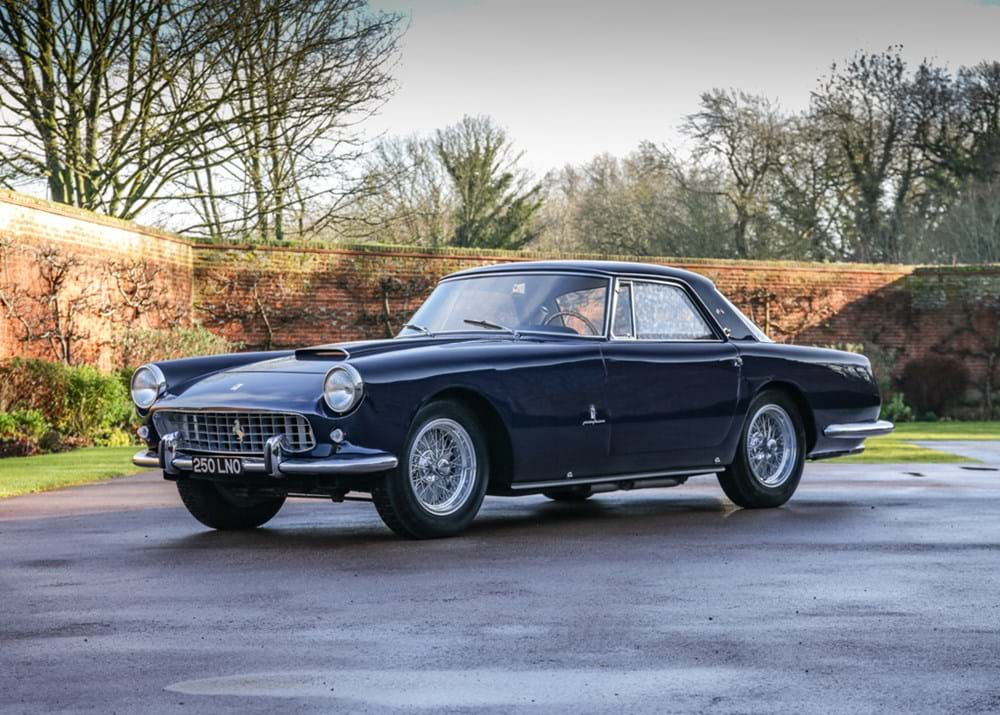
Ten years into a burgeoning empire, Signore Lamborghini purchased his first Ferrari, an aspirational purchase for any successful businessman at the time, but particularly Italian ones.
And not just any Ferrari, by the way. A bloody Ferrari 250 GT.
Lamborghini vs. Ferrari – Parte Uno
It’s actually difficult to say the exact 250 body type that got Ferruccio hooked, but in the following years he owned several 250s, including a 250 GT SWB Berlinetta and a 250 GT 2+2 four-seater, plus a 330 GT 2+2 and the 400 Superamerica. So erm, he was a fan.
Except that he wasn’t.
Some time in 1961 he commissioned engineering firm Società Autostar, and a certain Giotto Bizzarrini, an ex-Ferrari engineer and the founder of legendary marque Bizzarrini, to lead the development of a road-car-focused V12 engine. He hated the Ferrari approach of adapting race-car powertrains.
Bizzarrini knew what he was doing, and despite disagreements over its design, specifically the high revolutions and dry-sump lubrication system typical of race engines, and a court trial over withheld payments, this engine, and the evolutions of it, would go on to power the Lamborghini stable for almost 50 years.
So, he had his engine. But no spark.
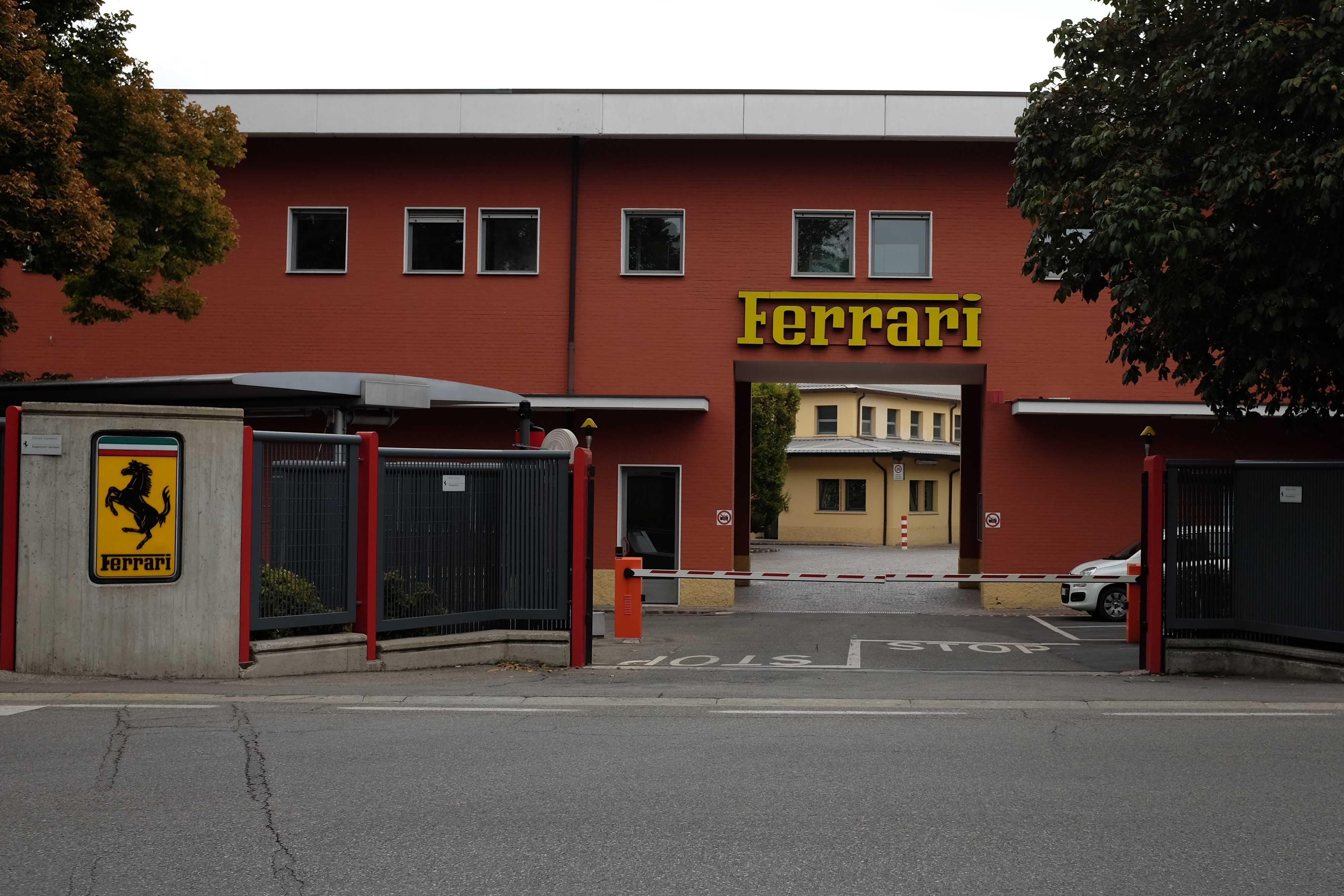
He found the spark thanks to a persistent clutch problem that became so frustrating, he found himself driving to Maranello to confront Enzo Ferrari himself, sometime between the summer of 1962 and early 1963.
Arriving at the hallowed gates of Maranello, the heart of Ferrari’s empire, he demanded a meeting with Enzo himself. Lamborghini, a proud and outspoken individual, confronted Signor Ferrari with his grievances, claiming the clutch was “a cheap tractor part.”
Enzo, known for his volatile temperament and unwavering self-belief, scoffed at Lamborghini’s suggestion. He famously retorted, “Lamborghini, you are a tractor driver! Leave the car building to us.”
And there was the spark. Probably the single clearest reason we’ve been blessed with so many Sant’Agata-based gems throughout the years!
Automobili Ferruccio Lamborghini S.p.A. was officially incorporated on 30 October 1963.
Anything you can do…
Stung by Enzo’s arrogance and determined to prove him wrong, Ferruccio decided to do just that. He would build his own cars, Grand Tourer, road-focused ones that would focus on comfort and drivability alongside raw power.
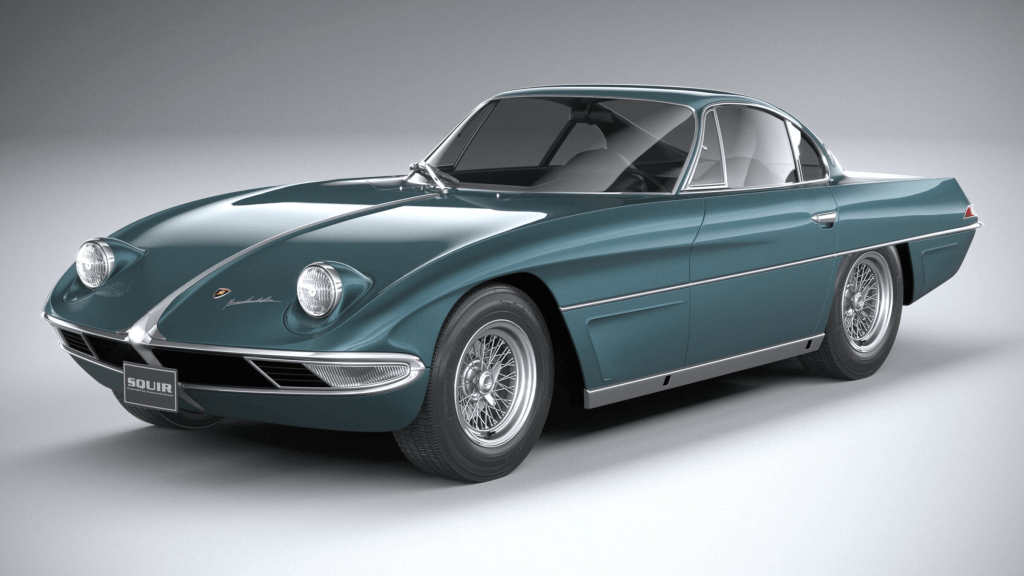
He hired talented engineers, particularly ex-Ferrari ones, and, together with Carrozzeria Touring, created first the above 350GTV concept that debuted at the 1963 Turin Auto Show, then turned it into the very first Lamborghini car, the 350GT.
With the 3.5-liter V12 engine and a relatively lightweight chassis, the super-GT had around 270 horsepower and a top speed exceeding 250 km/h..
It was a stunning grand tourer that redefined the automotive landscape, generated furore amongst journalists and enthusiasts and, most importantly, validated Ferruccio’s vision. Sadly, only 131 were ever made, making them hugely collectible.

The 400GT 2+2 followed, and it may be even prettier than the 350GT. Its low slung fender and hood somehow hide a whopping V12 beneath it, whilst the classic front curve that feeds into a pointed rear end, and the elegantly sloped cabin perched on top, complete a truly classic, yet oft underrated, automobile.
There was a 3.9L V12-powered 350GT, called the 400GT, that was very short lived, selling only 23 units, but it acted as a bridge to the 400GT 2+2, which went on to sell a far more reasonable 224 units in 3 years.
The extra legroom, revised suspension, uprated powertrain and a synchromesh gearbox were all huge improvements. As were the subtle exterior tweaks.
Lamborghini’s opening performance was a resounding success. Ferruccio knew his sh*t, apparently. So what was next?

The Taurus Taunter
Late at night, and in secret sessions away from Lamborghini’s earshot, a small group of his youthful engineering team were plotting an even bigger two-finger salute to Enzo and his Maranello stable.
Almost definitely the world’s first supercar, the Miura was penned by a certain Marcello Gandini, a rising star at Carrozzeria Bertone, to enshroud the revolutionary mid-engine layout P400 prototype developed in secret by Gian Paolo Dallara, Paolo Stanzani, and Bob Wallace.
Though Ferruccio was at first cautious (the thing was vastly different from anything before), he not only gave it the green light but named it after a certain world-famous cattle-ranch he’d visited in Sevilla, Spain, in 1962.
Miura.
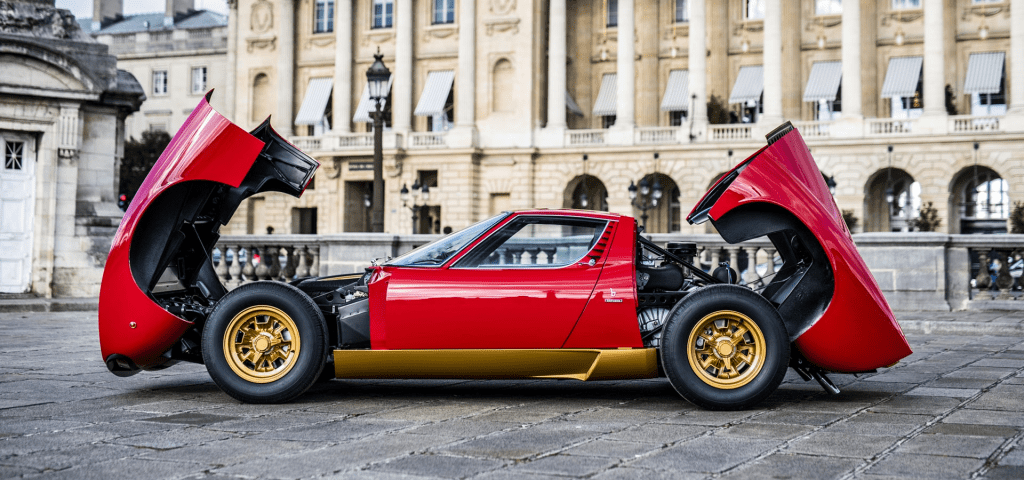
It debuted in Geneva in 1966 and enshrined itself as an inevitable icon mere minutes later as journalists ogled over every inch of its beautiful surfaces and novel engineering.
Several iterations followed, including the violent SV and the race-bred Jota, and an appearance in The Italian Job cemented its status as an automotive icon.
Which sadly can’t be said about the Islero that followed.
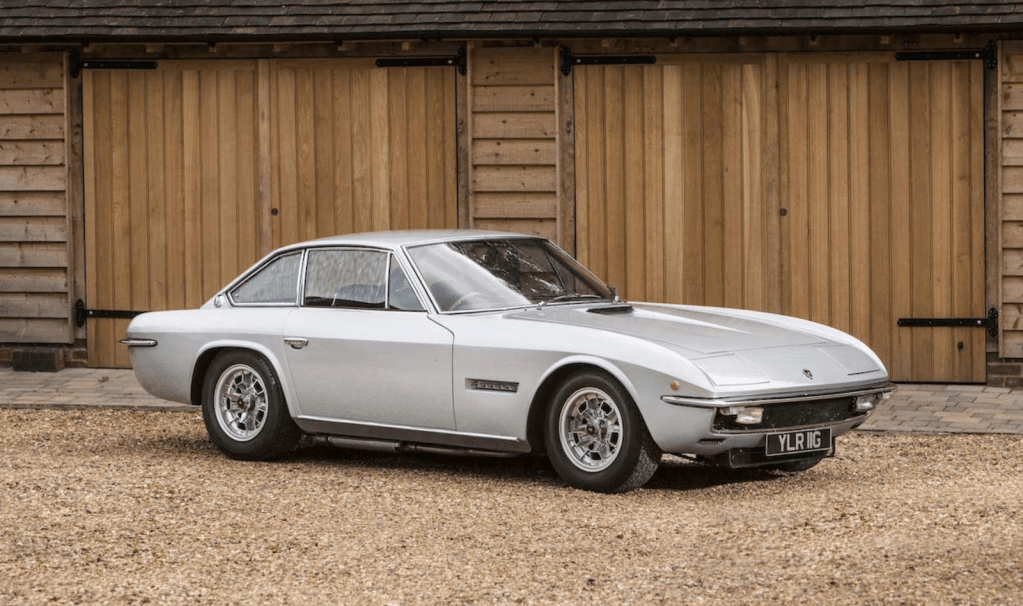
Named after a Miura bull that killed famous bullfighter Manolete with a vicious right horn, despite poor eyesight, questions were raised about Ferruccio’s own with its launch in 1968 to replace the 5-year old 350GT.
Though I’d argue that the criticisms are harsh, at least in regards to the Carrozzeria Touring-designed exterior and interior, only 225 units were built between 1968 and 1970 and an underwhelming engine, alongside a cramped interior and some build quality issues were off cited as reasons the grand tourer didn’t meet expectations.
Yet examples were owned by the likes of Roger Moore (Yep, James Bond), appeared in several films and one was even entered in the 1975 24 Hours of Le Mans race. So some perspective is warranted here.

Sword Flighting
With two cars pinned to bull-fighting heritage, and only one succeeding, Lamborghini changed his naming strategy for the highly successful, if bulky, Espada. Say what you want about Ferruccio Lamborghini, but the man was decisive.
Meaning sword in Spanish, he sliced short the Ilsero’s life and served up a complete re-interpretation of the modern GT. Inheriting the 3.9L V12 and chassis from the 400GT, it was clothed very differently, its exterior and interior wardrobe designed by none-other than Marcello Gandini. The guy had a gift.
Though chunky and perhaps less premium-looking than what had come before, it was practical, refined and still all the wonderful things you’d associate with a Lamborghini. And that was reflected in its volumes.
Series I ran for just two years, ending in 1969, yet some 186 units were sold. With the launch of a Series II the same year, another short 18 month run followed that somehow created a further 253 units. And an extended Series III that ran from 1970 until 1978 saw 778 units built. A resounding success.
And plenty more was in the pipeline.
Jara-Meh…
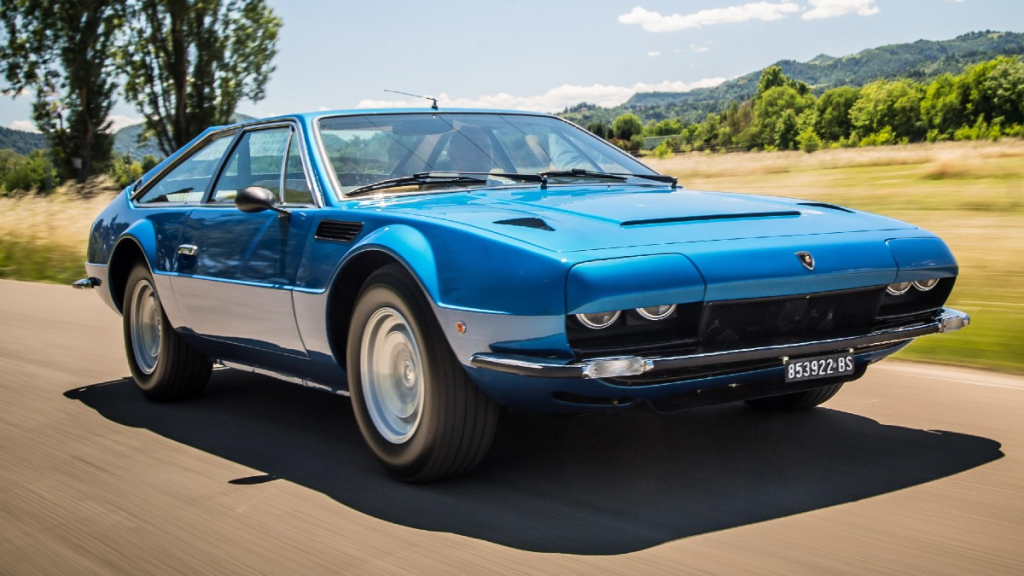
The Gandini-penned Jarama was first shown to the public in Turin in 1970, the chunky bodywork and pop-up lights wrapped around a shortened Islero chassis that was US compliant. Lamborghini had broken new ground in the USA with the Espada, and wanted more..
Named after the fighting bulls bred in the Jarama river region in Spain, and with Gandini and Ferruccio seemingly hand-in-hand when it came to creating motoring marvels, the 3.9L V12-powered GT, with a top speed of 245 km/h (152 mph) was destined for success, right?
Well in the space of 7 years, just 328 were sold.
I’d argue that the Alfa Romeo Montreal embodied Gandini’s evolving design ethos more than the Jarama, but the Lamborghini was far more refined and spacious, with a greater poise and undoubtedly better performance. So was it the hefty $154,000 price tag (in modern money) that kept buyers back? Or the oil crisis that gripped the world during the early to mid-1970s?
Well it’s safe to say the latter certainly affected Lamborghini, but we’ll come to that shortly.

8/12
With money tight, capacity spare and an unstable world becoming increasingly concerned by rising oil prices, Lamborghini decided to follow the path trodden by Ferrari’s 308 GT4 “Dino” and introduced a V8 into the stable.
They started from the ground up, with Paolo Stanzani, an engineer so embedded in Lamborghini, since its inception, that he was growing roots, leading the blank-sheet conception. The 2+2 layout was, however, maintained, Ferruccio continuing to insist on everyday practicality for the vehicles he produced.
The Urraco was born at the 1970 Turin Auto show, alongside the Jarama, and arrived in production guise 2 years later in 1972. Named after Miura-bred fighting bulls, the Urraco started life slowly in P200 guise, with only 66 units sold. But by the end of its life, and with later variants providing considerable power upgrades to the V8, its life ended in 1979 with 791 units shipped.
By any measure, a moderate success.

Turbulence
Though the V8 would be used in later models, the V12 was at crisis point for Ferruccio and his team. In fact Lamborghini was at crisis point, and so was the automotive industry. Spiralling government budgets, flagging economies, rising unemployment and fears of an impending oil crisis affected the pockets of everyone. And when people buy less, the people selling products are affected.
And in an oil crisis, not many people want V12s.
In 1971, Lamborghini’s tractor company, which exported around half of its production, ran into difficulties. Foreign importers cancelled orders, military coups enforced the cancellation of government orders, and a rigidly-unionised workforce made it difficult for him to remain financially flexible. He sold the entire business in 1972.
But worse was to come.
His automobile business too was flagging. Auto show debuts (see below) were being cancelled, prototype projects were paused and Ferruccio spent a significant amount of his time courting buyers for Automobili Ferruccio Lamborghini S.p.A.
Just a few months after selling his entire tractor business, Ferruccio sold 51% of his company to his friend and Lamborghini fan / owner Georges-Henri Rossetti for US$600,000. The company was no longer his.
A last Hurrah?
Ferruccio continued working at the factory – how could he not? – and was still able to deliver the production variant of a true automotive icon before selling the remaining 49% of his business in 1974.
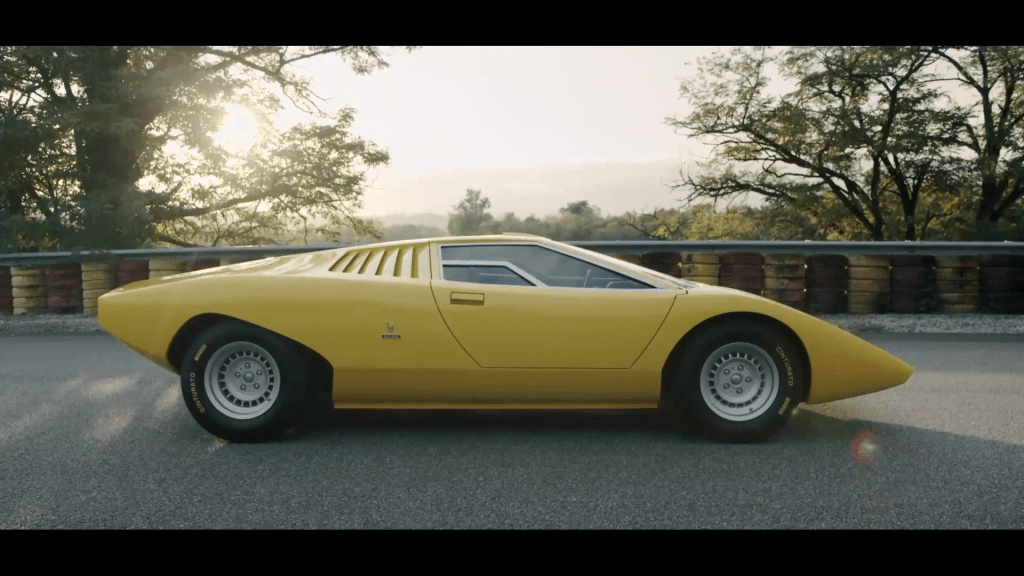
I realise that icon’s an over-used word, but what came next from Lamborghini became a star of the silver-screen, a poster-perfect image bedecking the rooms of nearly every ’70s child and the perfect embodiment of the wedge design trend that had gripped the auto industry in the 1970s (though I’ll also accept the Lancia Stratos here).
And once again, it was penned by – you guessed it – Marcello Gandini.
What started life as the LP500 concept, unveiled to the public in 1971 as the successor to the wildly popular Miura, took 3 year more years of refinement before it eventually launched in 1974 as LP400. Or Countach.
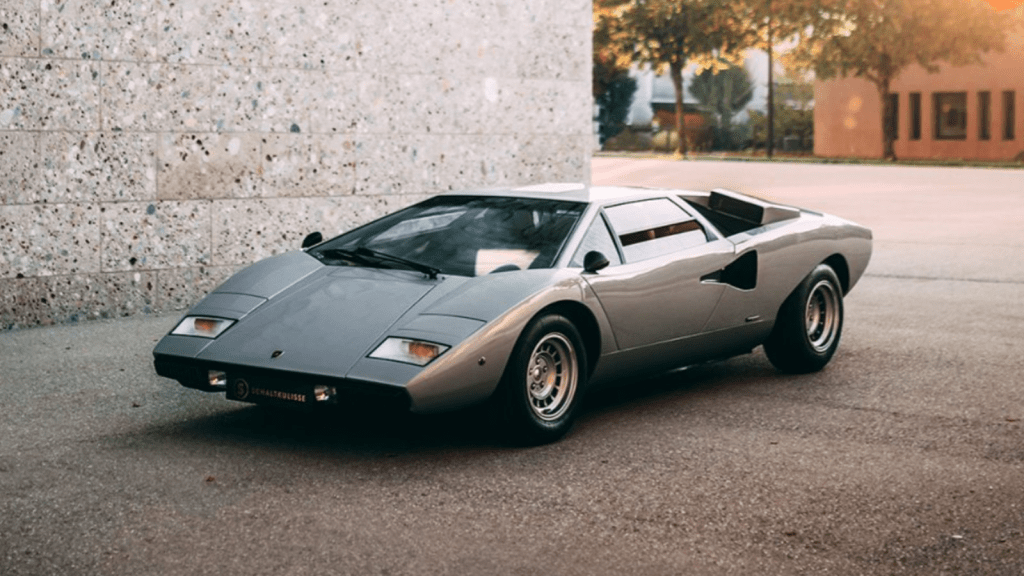
“A masterpiece of automotive engineering,” said Automobile Magazine at launch, whilst Car and Driver stated the Countach to be “… a supercar in every sense of the word”. And it was, it really was.
There’s an argument that the use of the 4.0L V12, and its cooling needs, led the production variant to look even more eccentric (and less refined) than the LP500 concept, the large intakes proving vital, particularly at high speeds. And we’re so very grateful.
Series I lasted 5 years in production, and though only 158 were produced, it was a supercar and was estimated to have cost around 15 million Italian Lire at launch. Translated into modern money, we’re talking roughly $222,000 USD today. So those volumes were good. But the best was on its way.
The LP400 S followed, and another 5 year production run, with 237 units of the slower and heavier upgrade sold, whilst the 4.8L V12-powered LP500 S sold 321 over a 4 year period. The crazy, 455HP 5.2L V12 LP5000 QV behemoth sold 621 units in just 4 years, and a special 25th Anniversary edition, spread over 3 years, sold another, staggering, 658 units.
It was clear that the Countach was huge for Lamborghini. And the world.

Ciao, E Grazie
As was Ferruccio Lamborghini, as you’ll come to learn in subsequent articles.
Having severed all connections with the cars and tractors that bore his name, Lamborghini retired to an estate on the shores of Lake Trasimeno, in the province of Perugia in central Italy, where he would remain until his death.
A rather tranquil end to a life that caused such long-lasting disruption in a well-established, oft-snobby, industry.
What started with a snub led to the creation of a marque, an institute that would go on to create some of the most outrageous cars in recent memory, some of which you’ve already seen.
“I wish to build GT cars without defects – quite normal, conventional but perfect – not a technical bomb,” he once said. Well Ferruccio, I think you did both.
Whether that’s a good or a bad thing I’ve no idea. I just hope he’s smiling up there, in the lofty clouds of heaven. And sticking two fingers up to the Russian-doll-esque cars of today.
—
So there you have it; part I of our series on Lamborghini’s history. And if stories of bankruptcy, American ownership and a vehicle called The Devil – that was briefly the fastest in the world – excite you, you’ll want to stick around for part II.

 Cars Less Traveled
Leave a comment