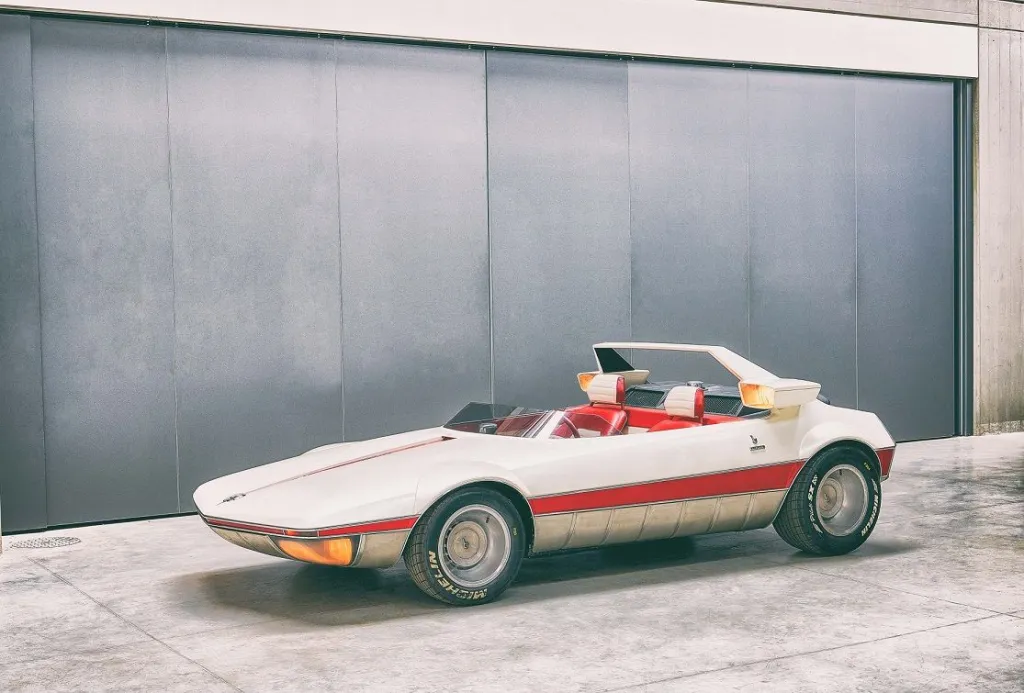
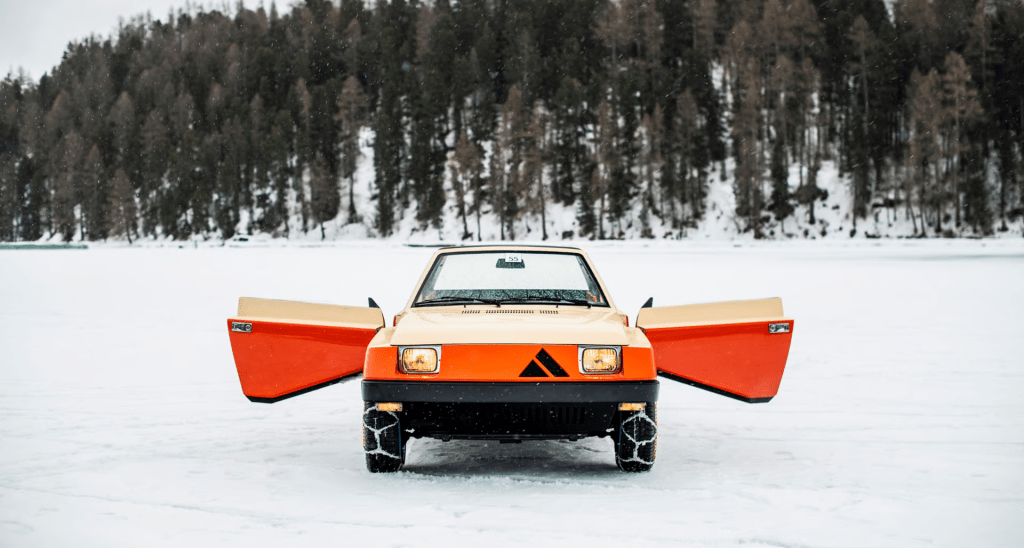
I saw an Instagram post the other day (I’d love to give credit, but I can’t find it now) about the Autobianchi A112 Giovani by Pininfarina, an absurdly adorable dune-buggy with wonderfully short dimensions and handfuls (literally) of wheel clearance. As for the achingly ’70s paint job, don’t get me started!
It got me thinking… Oh my God that thing is so cool.
Swiftly followed by I wonder how many people know the backstory to one of Italy’s quirkiest marques?
So here’s the story of Autobianchi.

Bicycle Beginnings
The story begins in 1885 when Edoardo Bianchi, at the age of just 20 years old, opened the above workshop in a neighbourhood of central Milan, Italy, and began selling all manner of things including surgery equipment… and penny-farthing bicycles.
Ever the pioneer and experimenter, Bianchi began experimenting with internal combustion engines (ICEs) before the turn of the century, and combined his passion in attempts to motorise his bicycles.
Bianchi’s creations include the front-wheel caliper brake, the combination of a smaller front wheel and a specialised chain to reduce pedal height, plus various construction techniques that essentially created the basic, comfortable bikes you know of today.
Renowned for their quality and craftsmanship, they became the model of choice for the Italian royal family and a whole host of athletes, one of whom, Gian Fernando Tommaselli, won Bianchi’s first international medal with a win at the 1899 Grand Prix de Paris.
Selling like hotcakes, and with various factory moves needed to supply the burgeoning demand for his bicycles, you’d think Bianchi would be too busy managing an empire; you’d be wrong.
Not long after the turn of the century, Bianchi moved into motorcar manufacturing, effectively as a coach-builder, utilising factory space to handcraft unique models off mass-produced chassis’.
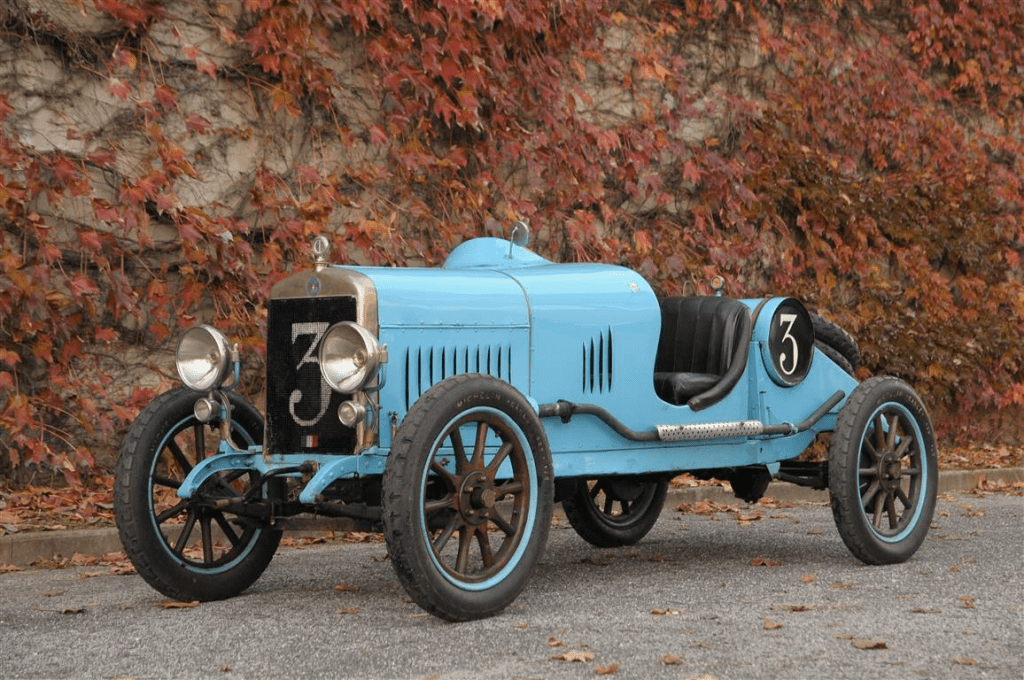
The wonderful 1918 Bianchi Tipo 12 Roadster listed by Bonham’s is one fine example, the below 1930 Bianchi S5 ‘Open’ Tourer another.

Bianchi managed to survive and, essentially, thrive during WWI, supplying the Italian military with bicycles and using the challenging demands of the soldier’s everyday uses to pioneer the full suspension bike, amongst other creations.
And by the end of the ’20s, they were flying, becoming Italy’s second-largest producer of motorcars by volume after, of course, Fiat.
However, thanks to a combination of worldwide economic crises thereafter, and the brutality of World War II thrown into the mix – which destroyed their factory in Abruzzi – they decided to focus solely on bikes and commercial vehicles.
And when Bianchi himself died in a car accident in 1946, the reins were handed over to his son, Giuseppe, who remained steadfast in maintaining his father’s decision not to rekindle motorcar production.
Though it wouldn’t last long.
A Time and a Place
Edoardo Bianchi’s thirst for invention and evolution had already seen his eponymous company evolve into a manufacturer of motorbikes and commercial vehicles and, following WWII, this continued, the Europe-wide economic crises actually increasing the need for low-cost transportation for businesses and citizens alike.
However, by the early ’50s, and with vehicles like the Citroën 2CV, Renault 4 and various microcars mobilising the continent, Bianchi, in particular their general manager Ferruccio Quintavalle, saw an opportunity to rejuvenate their factories and harness their automotive experience.
The problem was that they simply couldn’t afford to build and operate the sort of factory that could produce vehicles, and if they were honest, they didn’t have the expertise to design a robust set of underpinnings in comparison to other marques such as Rover, Renault… or Fiat.
On 11th January, 1955, after various negotiations, Fiat, Pirelli and Bianchi entered into a 3-way agreement, each with just over 33% of shares in a new company; Autobianchi.
Fiat would use all their experience to provide the technical base and components for the assembly of the cars. It saw this as an opportunity to compete directly with the premium coach builders who were using the Fiat chassis. Pirelli would supply the tyres, and expand their OEM market share, whilst Bianchi would prepare the bodies, assemble the vehicles and, they hoped, eventually return to full passenger car production themselves.
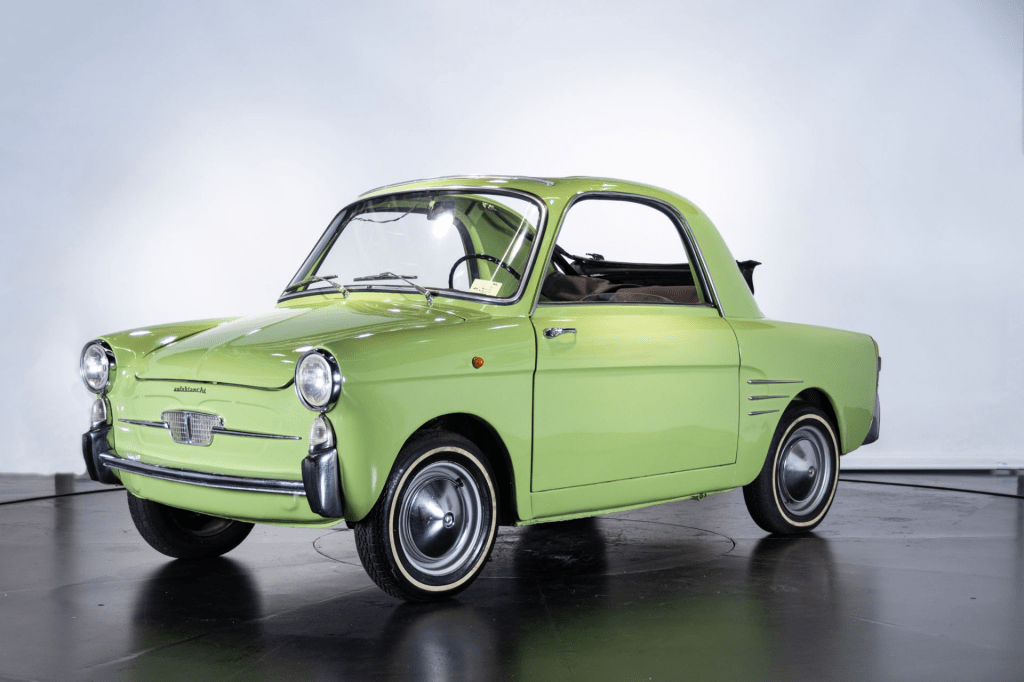
And so, just two and a half years later, on September 11th 1957, the Bianchina, Autobianchi’s first car, rolled off the brand new production line in Desio, north of Milan.

Not Just a Tribute
Named Bianchina as a tribute to the very first car produced by Bianchi in 1899, a single cylinder-powered cart that went into wider production in 1900, the Autobianchi debutant was also pint-sized and micro-powered.
Sat on the newly developed Fiat 500 platform, it was propelled by a Fiat-sourced, air-cooled 479 cc engine, producing 15 PS (11 kW). No I don’t know it’s top speed, but I wouldn’t get your hopes up.
Debuting with the Trasformabile body style seen above, and with 17,000 sold in its debut year, it was clear that they were onto something and all manner of iterations followed.

I don’t know if the Berlina Special F variant is my favourite, with just 5,000 having been shipped between 1965 and 1969, but it’s cute, simple and rare, a great combination.
However, you wouldn’t call the overall model line rare, with more than 275,000 vehicles shipped during a 12 year span that included various evolutions of the Trasformabile, a charming convertible variant, my beloved Berlina and a couple of van body styles for good measure, the latter actually lasting until 1977.
It was low-cost, simple, elegant (well me and 275,000 people think so anyway) and it mobilised swathes of Italy.
Autobianchi had momentum.
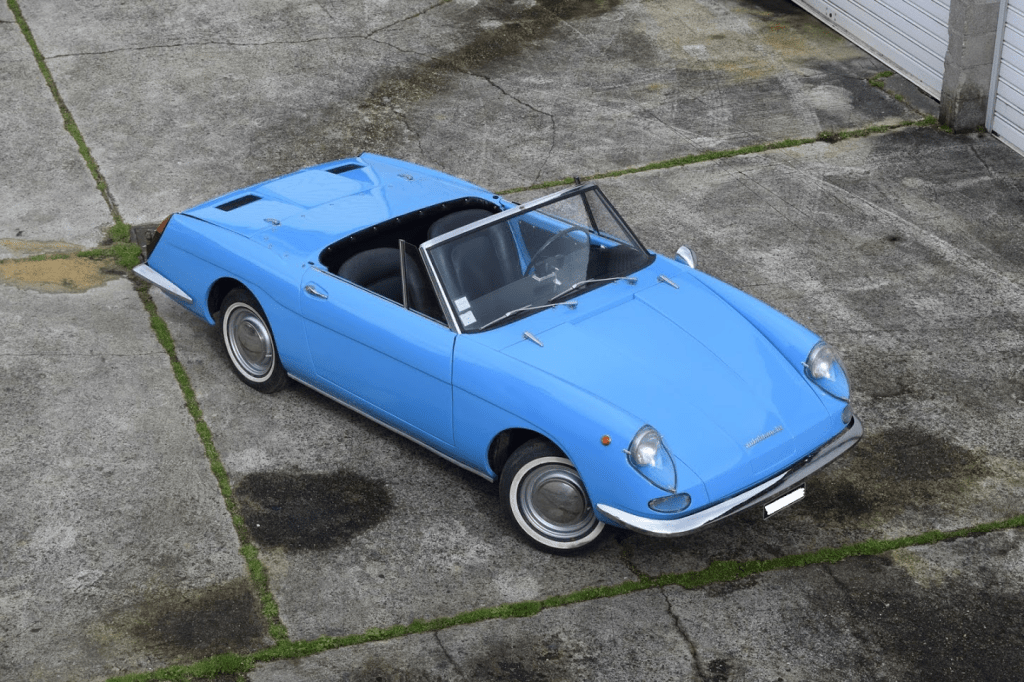
Experimentation & Integration
Fiat, wanting to harness the new-found company as a testbed for engineering experiments, encouraged the use of the newly launched 600D as a foundation for a new model. For good measure, they also proposed the trial of fibreglass-reinforced plastic body panels, the first use for any Italian, mass-produced car, because… well, why not?
And thus the Stellina was born.
Featuring unibody construction, a rear-mounted, water-cooled 767 cc straight-4 engine that delivered 29 hp (22 kW) and a Tom Tjaarda-penned design, it could, and possibly should have been a lot more popular than it was. Just 502 were ever sold.
Though the million lira price-tag, an attempt to position Autobianchi right at the top of Fiat’s blossoming brand tree, may have been a factor.
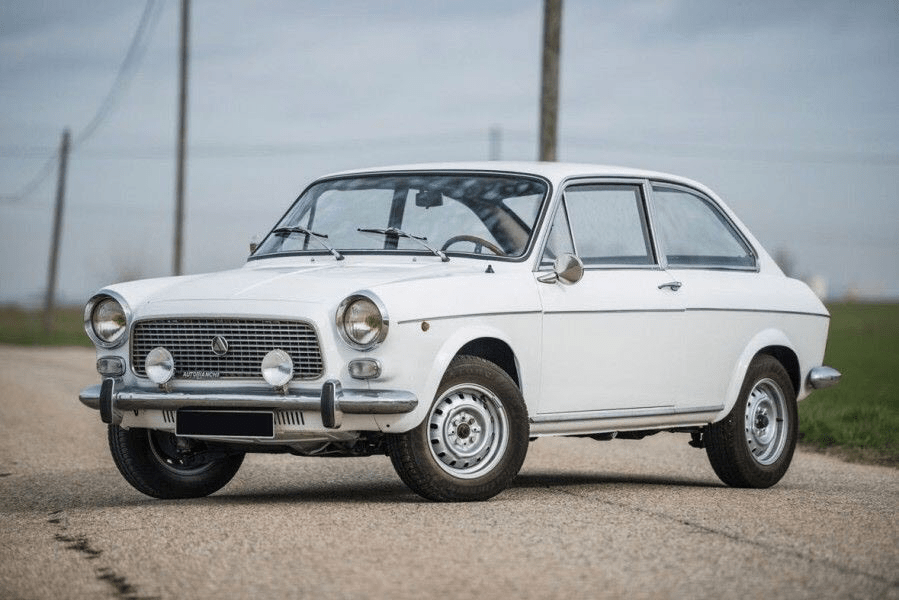
Just a year later and Autobianchi were at it again, debuting their vision of a front wheel drive, transverse-mounted engine layout that the BMC Mini had so successfully demonstrated.
The Primula was available as a two or five-door saloon, three or five-door hatchback and two-door coupé, with either a 1,221 cc or a 1,197 cc four-cylinder engine. There was a Primula Coupé S that used a 75 PS, 1,438 cc four-cylinder from the Fiat 124 Special, though the lack of a fifth gear limited the high-end capacity of all Primula models.
And it’s the gearbox that’s interesting here.
Unlike the Mini, Autobianchi had designed the gearbox to sit on the end of the engine with unequal length drive shafts, rather than a gearbox in the sump. This resolved the thirsty gearbox and lubrication concerns, and became the default layout for all front-wheel drive models to this day.
Yet in a 6 year span, only 75,000 were produced and today, they’re rarer than well-lubricated BMC Minis.

The end of the ’60s were a complicated time, with European citizens more mobilised and (possibly) wealthy than ever before. For Bianchi, it brought a steep drop in motorcycle sales, forcing them to sell their share in Autobianchi to keep themselves afloat.
Autobianchi was subsequently fully integrated into the Fiat S.p.A. stable in 1968.
So, was the end of the marque? Most certainly not.

A-OK…ish
A lot of things happened in 1969 that all influenced the direction and future of the marque.
Fiat purchased Lancia, bringing in the luxury marque to lead their group of premium brands; the Bianchina production was halted; and Autobianchi, in close proximity, launched not 1 but 2 new models.
We’ll start with the A111 just to… well, get it out of the way. Because it was the marque’s first (and only) venture into the small family saloon segment, and it flopped.
Though you could argue that it was doomed from the start.
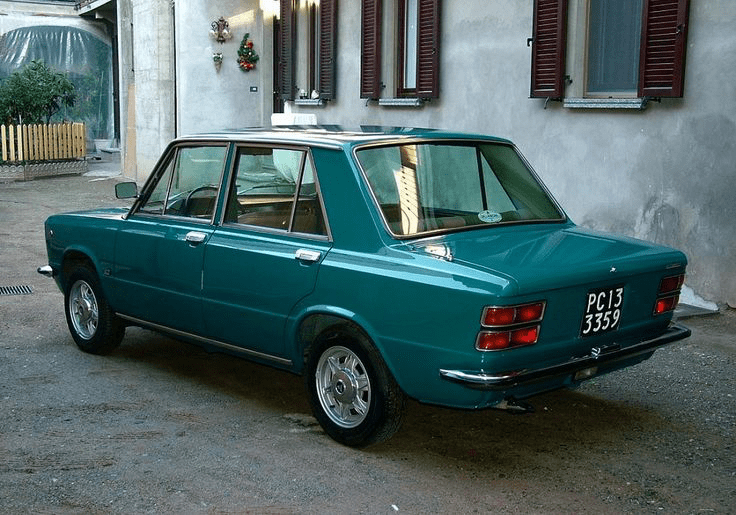
Fiat, and the Autobianchi team, wanted a replacement for the Primula, which in itself was, in some ways, a replacement for the Bianchina Berlina. Yet due to concerns with conflicting designs between Fiat offerings like the newly-debuted 128 family, they proposed a more conservative design based on Primula underpinnings.
To make things worse, Fiat’s design team were flat out, so they simply regurgitated a rejected design from a cancelled project, tweaked the front headlamps and approved it for production. Autobianchi were now experimenting not with innovation but with their own thresholds for pain.
Just 57,000 were sold during a lifespan of just 4 years, with Fiat churning out an increasing number of FWD models to render the A111 an irrelevance, a strategy that would soon affect the entire brand.
But don’t give in just yet…
Pinnacle
Autobianchi made small cars. In fact, even Bianchi made agile, compact cars. Despite a reputation for premium vehicles, it was the racing success of their dynamic, short wheelbase speedsters that boosted the marques strength amongst petrolheads.
And in the world of ordinary, road-going cars, it was well-proportioned superminis that they excelled at.
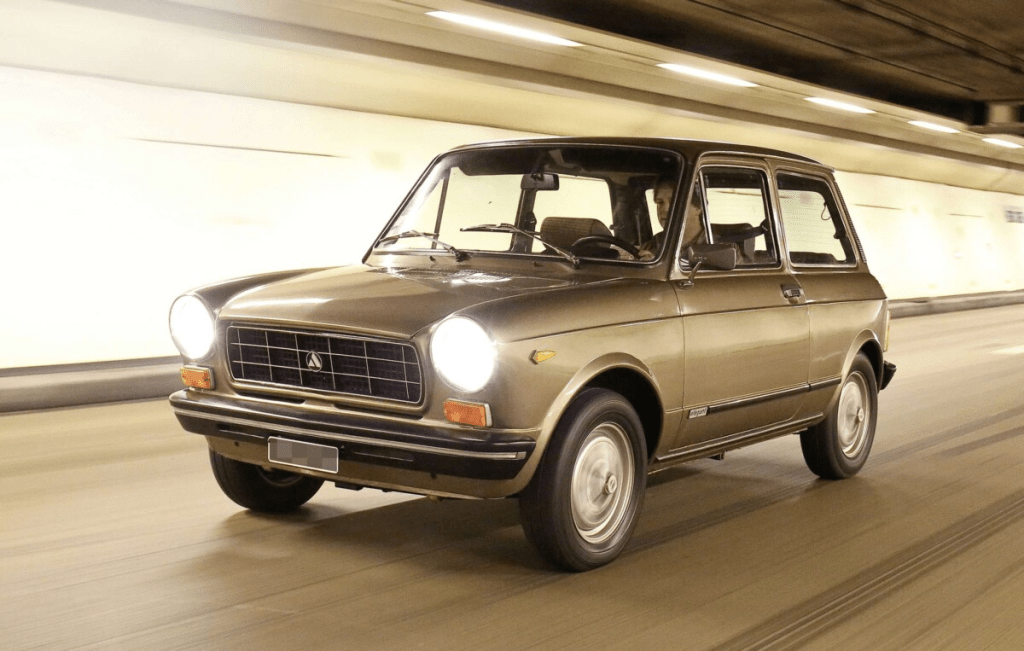
So when Autobianchi launched the A112 in 1969, expectations were high: It had the genetics; it had the Fiat 128 underpinnings; and it had been designed by none other than Marcello Gandini at Bertone.
The only surprise was just how good it was.

Its appearance is an obvious starting point, but for good reason. Simple and elegant, with a face as pure as any classic car, it balanced practicality and the need for interior space with a low slung hood and short overhangs. Gandini could work his magic on any car, apparently.
As we’ve said, it was built on a shortened Fiat 128, with a 903 cc OHV (Overhead Valve) Inline 4-cylinder engine from the 850 that was debuting in the FWD drive layout that had become Autobianchi’s signature.
The power plant coughed up 42 PS (31 kW) at launch before later being hiked to 47PS with absolutely no engine changes (mechanical or otherwise)! And, tipping the scales at 670kg (1,477 lb), it wasn’t ultra lightweight, but could carry four people in comfort, which was more than could be said for the Mini.
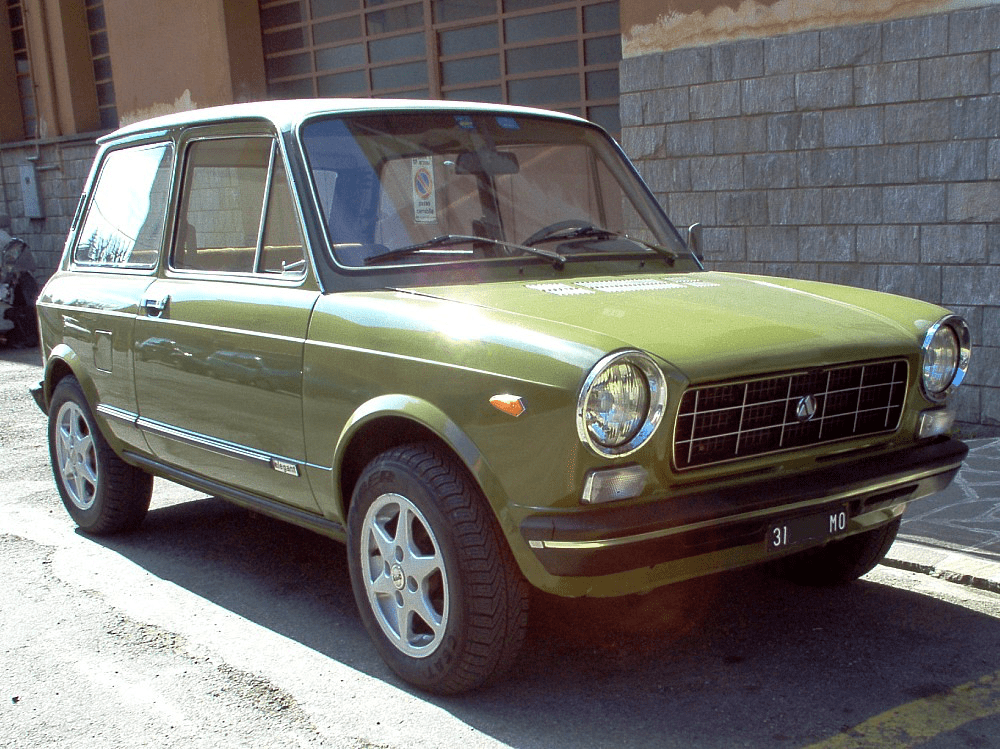
1971 brought an evolution of the first series with the introduction of the “E” for Elegant. There were some interior tweaks and a five-speed gearbox that appealed to it’s rapidly growing customer base, which included a considerable amount of young buyers that remained invested in the model until the end of it’s life.
In fact, a fact often overlooked is that, whilst 1971 brought a very basic makeover, it became a template for the model that other marques only considered much later; model year changes and series evolution.
Between its arrival in 1969 and its final production year in 1986, the A112 had 8 series and sold over 1.25 million cars. In a decade famous for economic crises and a failing auto industry.
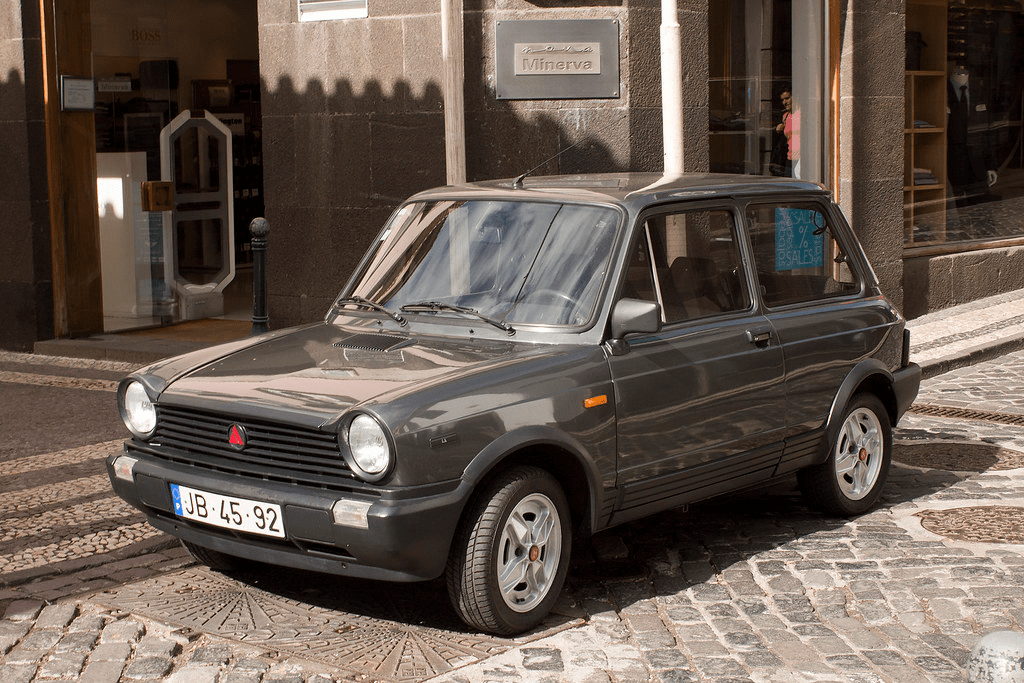
By 1984, female buyers represented 35% of A112 owners and about a third were in the 18-24 age range. Perhaps this was the reason for the near-continuous updates, as younger buyers tend to be more trend conscious.
Maybe it was because the segment was as competitive as it comes, with the BMC Mini and the Fiat 500 swiftly joined by Fiat’s own 127 (on the A112’s underpinnings), the Renault 5 and the VW Polo to name a few.
In fact, prior to the B-Segment, which today includes exactly these types of models, there was no real benchmark or standard. Until the A112 arrived, that is.
And if that wasn’t enough, the A112 also pioneered the idea of the hot hatch. And not a half-arsed attempt either.

Abarth Time
In 1971, in parallel with the “E”, Autobianchi introduced a variant honed by Fiat’s famous Abarth division. Whether as a means of promoting the brand, a way of broadening the A112’s appeal even further, or simply as an experiment, it doesn’t really matter; it was an instant classic.
Whilst initial power came from a 982cc powerplant with a twin-choke carburettor and an updated camshaft that provided 58HP, by 1975 the engine had grown to a 1050cc variant with 70HP. Weighing just 700kg, including special exhausts, the thing could shift.
And with that wheelbase, it could also turn. The vehicle, it was clear to see, was made for racing.
So that’s what they did.

Not only did it sprout various rally teams across Europe, it also spawned it’s own, one-make series: the Campionato A112 Abarth. Between 1977 & 1984, all manner of entries competed, including various famous Italian rally drivers such as Gianfranco Cunico, who also won the 1993 Rallye San Remo.
In fact, the legendary F1 Driver Olivier Panis once crashed an Abarth A112, such was the challenge of the volatile machine but also the respect of, and enthusiasm for, this dynamic vehicle.
The Abarth variants quickly garnered a huge following, particularly amongst race enthusiasts, that still exists today. And because of their volatile nature, not many exist. They’re highly collectible.

And as we’ve said before, the A112, and in particular the Abarth variant, also encouraged various concepts, including the above, Pininfarina-penned Giovani.
Designed as a sporty car for younger buyers, the Giovani featured a convertible roof design with a removable hardtop roof, plastic-composite body panels, integrated bumpers and a radiator grille in the shape of the Autobianchi logo.
Putting aside how achingly cool it is, it was a further demonstration, not only of the excellent Fiat 127 underpinnings, but of the Autobianchi mechanicals too.
Which makes what happened next so tragic.

Last Hurra-Y
B-Segment cars on offer in 1985 include the legendary Peugeot 205, the wonderfully proportioned VW Polo, the iconic Renault 5, the timeless Fiat Panda, the-… you get the point.
So what, in holy hell, were the Italian conglomerate thinking when they released the Y10, badged in markets as either an Autobianchi or a Lancia.
When you see vehicles such as the Y10, it’s easy to understand why people suspect Fiat of intentionally killing off brands. Because that’s precisely what the Y10 did for Autobianchi. And Lancia, essentially.
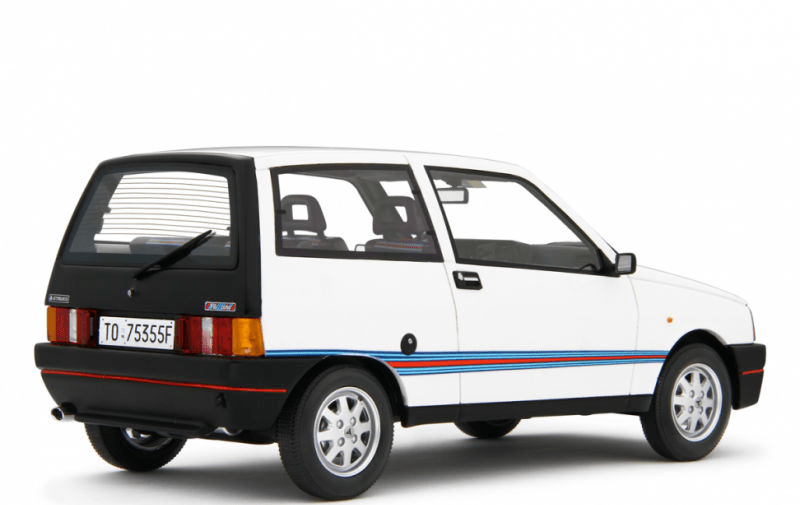
The car itself was a simple affair, based on the Fiat Panda but with a more luxurious interior than other Fiat marques.
It came with a novel rigid axle rear suspension that would later emerge on the Panda and that “cut-off” rear design that helped give the car a Cd (Coefficient of drag) of just 0.31, very impressive for both the time and segment.
However, designed by Fiat to align with the Lancia brand, yet still designed as a premium car, it was dull, misplaced and, more importantly, designed at it’s heart to be a Lancia, despite being sold as an Autobianchi in Italy, Portugal, France, and Japan.

As was now common, Fiat offered all manner of trims and facelifts throughout its lifetime, the Y10 finding roughly 850,000 homes before its production came to an end in 1995.
It even managed to come second in the European Car of the Year.
And that was it. In 1992 the Autobianchi factory closed and the Y10 production moved to Arese, near Alfa Romeo, for its remaining years. The Ypsilon followed for Lancia whilst Autobianchi were… well, never mentioned again.

Legacy
So how did Autobianchi go from European Car of the Year contenders (3rd place three times with the Pimula, A112 and… the Y10) and technological pioneers to a name barely echoed in the halls of northern Italy’s neon-lit offices?
I have no idea, really.
Perhaps it was the fact that Fiat had overstretched themselves, with Autobianchi, Lancia and, to some extent Ferrari, having been joined in the Fiat stable by Alfa Romeo in 1986.
Or maybe they simply couldn’t place Autobianchi within this stable, with too many premium marques competing for the same segments, whilst Fiat remained highly protective of their own brand in the less-premium arenas.
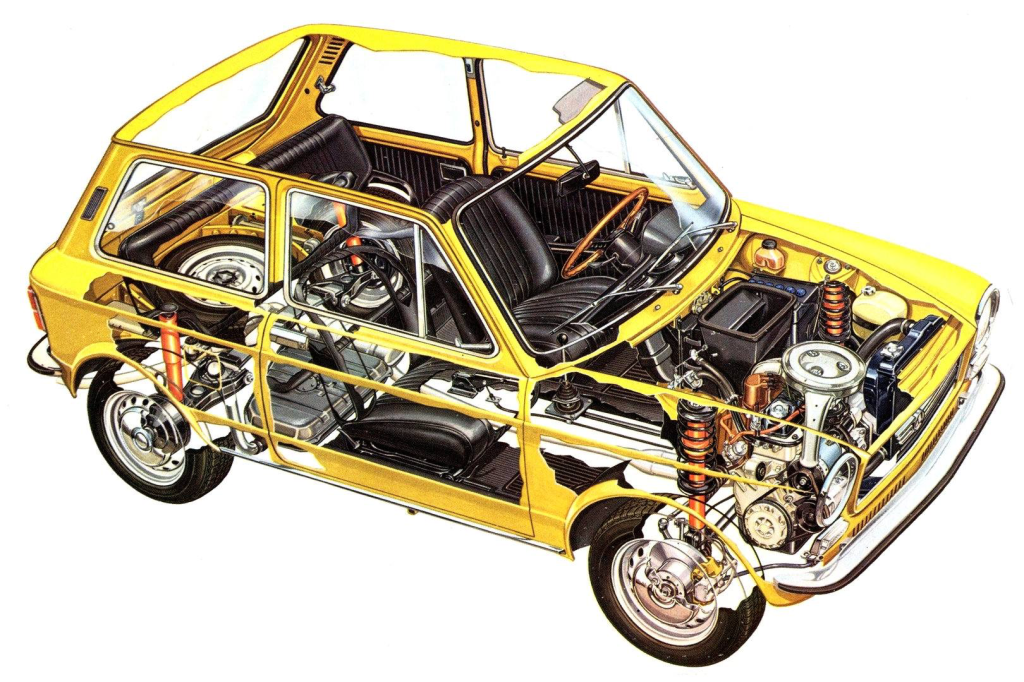
Whatever the reason, the death of Lancia soon followed, suggesting Fiat simply didn’t understand the value of the brands they had, or how to position vehicles appropriately.
And so we lost a brand, a marque that, although short-lived, gave us so much.
What started with the vision of one man, Edoardo Bianchi, whose vision at least lives on today in bicycles, brought us quirky cars, fibre-glass body panels, the mechanical foundations for so many excellent, joyful vehicles and, for many automotive businesses, a product cycle template that lives on today.
Not bad for a bike manufacturer, eh?
***
We hope you enjoyed this relatively serious article as much as we enjoyed writing it.
And believe us when we say, there’s loads more to come.
So subscribe below to avoid missing out on all the good stuff coming up, and feel free to read all our stories already written.
- 60 Years of the Ford Mustang
 The Ford Mustang is 60 years old, and despite its legendary status, we need a reminder. Plus, you know, wish it happy birthday.
 - Alles Gute zum Geburtstag VW Golf!
 It’s been 50 years since we were first graced with the magnificent, Giugiaro-penned VW Golf. We’re here to wish it Happy Birthday!
 - Bankruptcy – Essential Filter or a Rising Tide?
 Is the current spate of automotive companies closing their doors a worrying trend or part and parcel of a healthy, evolving industry? We look to history for the answer.


 Cars Less Traveled
Leave a comment