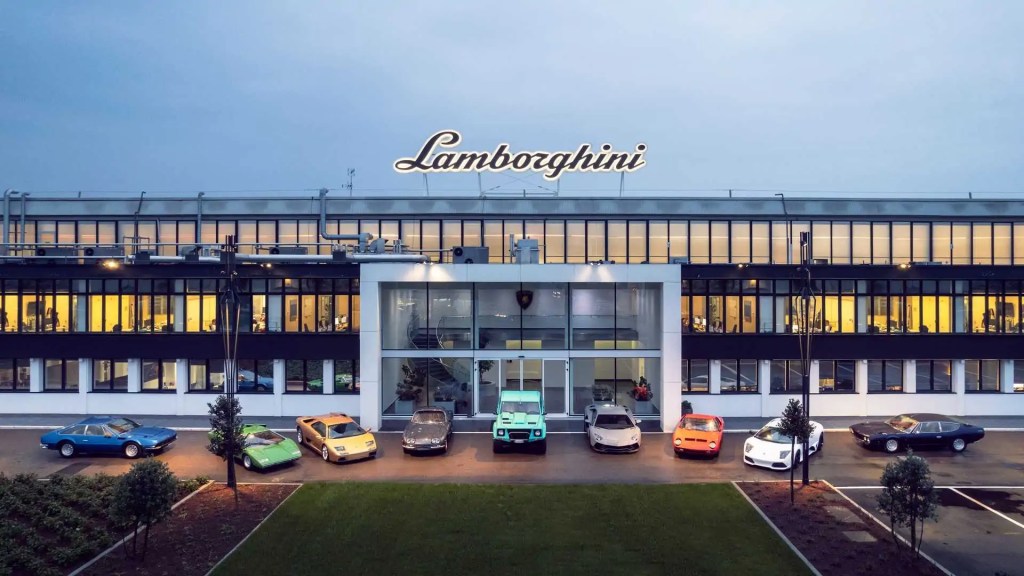
For those of you who’ve made it this far… congratulazioni.
This is the third and final part in our series on Lamborghini’s weird and wonderful history. In this part we’ll be covering the company’s development under Volkswagen AG, and ruminate a little on what the future may hold.
So, let’s dive right in…

Hello and Goodbye
As the dust of the Asian economic crisis settled in 1998, a new chapter unfolded for Lamborghini. The iconic Italian bull had weathered its fair share of storms from bankruptcy to boardroom battles. Now, under the watchful eyes of automotive giant Volkswagen AG, a new era awaited.
Ferdinand Piëch, the visionary leader of the Volkswagen group, saw an opportunity amidst the market’s turmoil. With a keen eye for potential, he orchestrated a daring move – acquiring Bentley, Bugatti, and Lamborghini for a combined sum of $1.15 billion. This audacious acquisition, later dubbed “Piëch’s Power Play,” reshaped the luxury car landscape and injected a new sense of purpose into Lamborghini.
But not before a swansong for “El Diablo”, the car now nearing 10 years old. Having already received a facelift and refresh in early 1999, with the pop up lamps replaced with those directly from the Z32 Nissan 300ZX (you thought they looked familiar didn’t you?), interior tweaks, a power hike and ABS for the first time, Volkswagen then threw out a host of low-volume derivatives to squeeze any remaining drop of profit from the vehicle.
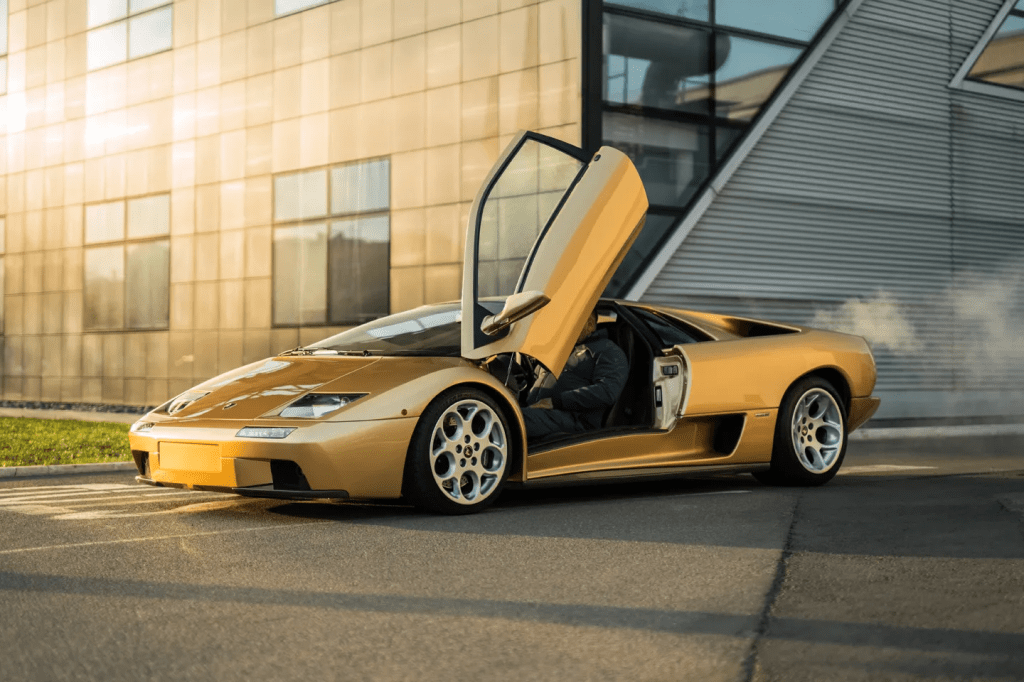
There was the initial Diablo GT in 1999, Powered by a 6.0-liter V12 producing 575 horsepower and limited to just 80 units, in Europe only, though some still made it across the Atlantic. There were a lot of exterior tweaks, but the McLaren F1-style roof-mounted air ram was certainly one of the most fist-biting ones.
Just a year later and the oddly-elegant Diablo VT 6.0 was introduced. Again, the majority of changes were on the exterior, but there was no variable-valve timing and a remapped ECU or the V12, all in an attempt to refine the Diablo a little.
And things ended, in late 2000, with the GTR, a track-focused monster built upon the SE30 Jota’s legacy. It boasted a lightweight carbon fiber body, aggressive aerodynamics, a massive rear wing and a race-tuned suspension to tame the 595-horsepower V12. Though evolution rather than revolution, the Diablo bowed out with nearly 3000 units sold.

Bull-ish
Under Volkswagen’s guidance, Lamborghini embarked on Project L147, aiming to replace the aging Diablo. The result was the Murciélago, a sleek and powerful beast that debuted in 2001. Taking its name from the legendary fighting bull that survived a brutal sword encounter, the Murciélago embodied Lamborghini’s spirit of tenacity and power.
It was also significant in that it was the first new design in 11 years and, as a successor to the Diablo, was a coupe from the outset but just 2 years into its life was offered as a roadster and various limited volume derivatives
Its 6.2-liter V12 engine unleashed a symphony of 580 horsepower, propelling the car from 0 to 60 mph in a mere 3.8 seconds. And it wasn’t just fast, it brought a composed angularity to Lamborghini that would be evolved over generations, and it was a little more grownup, a little more responsible, a little more… German.

Third Time Lucky
Whatever your feelings towards the Murciélago, and the firm’s product development under Volkswagen, the high profit margins of catering to the elite (and still selling 4000 units over 9 years) enabled Lamborghini to finally deliver a lower-cost model for the masses… ahem. Ok, let’s at least say a “broader audience”.
Thus, Project L140, the “baby Lambo,” gave birth to the Gallardo in 2003. This mid-engined V10 beast offered a more accessible price tag and a surprisingly practical driving experience.
So whilst it was the first Lamborghini to feature a V10, it was a Lamborghini once again named after a bull-fighting breed, it came in all manner of body styles and the design had once again evolved away from eccentricity towards simplicity and refinement. At least on the outside.

With its sleek lines, sharp handling, and a 500-horsepower engine, the Gallardo became an instant hit. It not only expanded Lamborghini’s reach but also proved that the brand could offer exhilaration without breaking the bank.
This is what it takes to maintain a successful, profitable business, some would argue. A range of products, with a simple, cheaper entry-point that builds ambition to one-day own the range topper.
And with over 14,000 sold before the last one left the line in 2013, who are we argue with the logic?

A Raging Machine
As the decade progressed, Lamborghini sought to raise the bar again. Project L182 resulted in the Aventador, unveiled in 2011.
At the very top of Lamborghini’s range, it boasted a 6.5-liter V12 engine pumping out 700 horsepower, making it the most powerful Lambo ever built at the time. That turned into a 0 to 60 sprint in just 2.9 seconds and a top speed of 217 mph.
And, let’s be honest, it’s a handsome car too, if not exactly the beautiful Miura or the bulbously brilliant Countach.
And I’m about to touch on a theme we’ll continue shortly; are power hikes and barrier-shattering top speeds really the essence of Lamborghinis?

For all the insanity of the Countach and Diablo, Lamborghini’s vision, the very reason for starting the company, was to create powerful, comfortable, driver-focussed GTs, cars for long journeys with the family.
So for all of the applause that we must summon – deservedly – for Volkswagen AG and their turnaround of the Italian marque, is it still a brand that has remained close to its core principles?
Or does that even matter?
Because in 2012, Lamborghini hopped well and truly onto another bandwagon.

Holy Cow!
That’s right, it’s been well over a decade since Lamborghini debuted the long-awaited successor to the LM002, and it arrived unsurprisingly in Beijing, then the world home of SUVs.
Sadly for some, it inherited absolutely none of the LM002’s DNA, not even visually, the Italian marque favouring sleek designs, heavily-raked glass and a cramped interior over off-road capability and practicality.
It looked good – I mean come on, look at it – and was so well received that Lamborghini kicked-off the project there and then, though it still took close to 5 years to become a production-ready road monster.
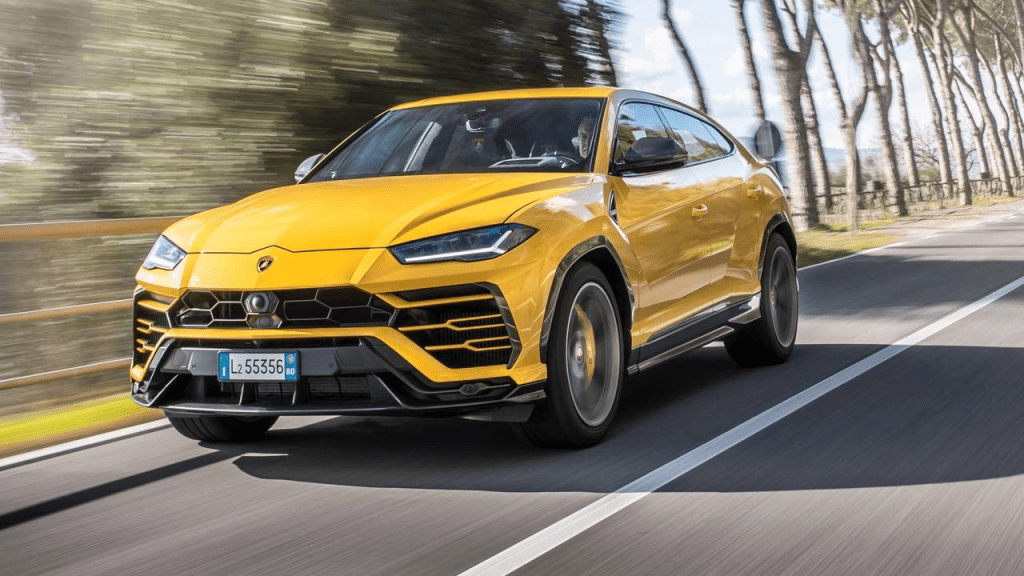
And it is a tarmac-gobbling beast, of that there’s no doubt.
With a 4.0L twin-turbo V8 under the hood, churning out a stonking 641 horsepower, a 0-60 mph of 3.6 seconds and a top speed exceeding 190 mph, plus that gaping front-end, it’s brash, loud and arrogant, and with over 6000 sold in 2023 alone, there’s a lot of people looking for exactly this.
Just remember, as with many Lambos now, it’s got an awful lot in common with Porsches, Bentleys and Audis, the engine a retuned and tweaked Cayenne Turbo unit that’s now been rolled out into Audi S Models and V8 Bentleys.
So don’t come this way looking for exclusivity.

Though maybe that’s the key to success here, right?
Because the Italian marque has quickly rolled out low volume specials of the Urus, including the leaner, meaner, greener (in colour anyway) Urus Performance above, which is more expensive and rarer.
In the meanwhile, Lamborghini sold more than 10,000 vehicles last year, including 3000 alone in the USA, a market the marque had consistently failed to capture.
So what does the future look like?

Bullish Trends
As the automotive world shifts towards electrification, Lamborghini can’t stand still. The brand has already embraced hybrid technology, integrating it into the Aventador and debuting the Revuelto PHEV in March 2023.
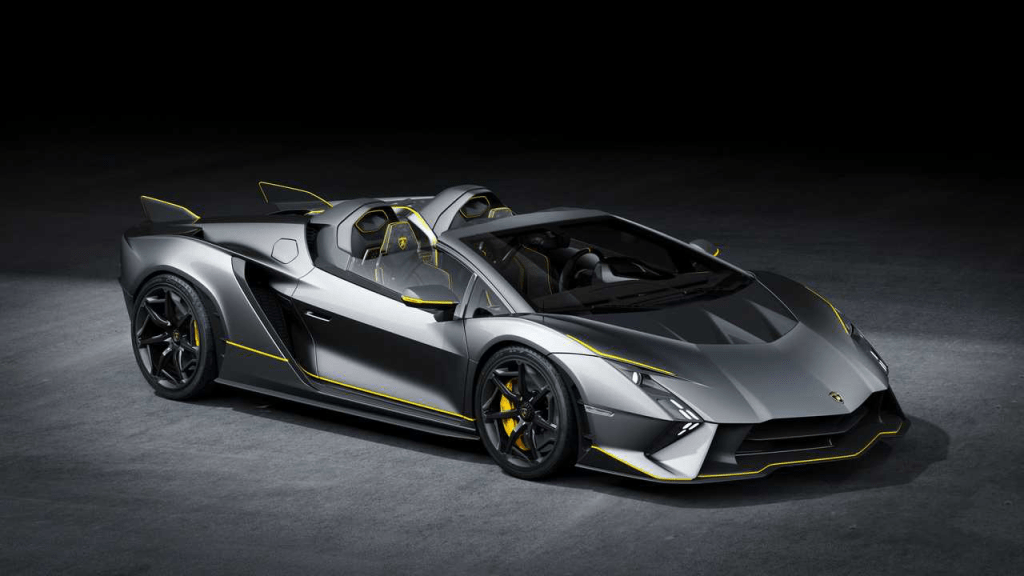
They’ve already confirmed that hybrids will be their near-term future, bidding farewell to the pure V12 power of the past with two one-off beasts: the outrageous Invincible and the Spider-variant Autentica, shown below.
And the marque, whether we like it or not, is already envisaging an electric future, debuting the Lanzador concept last year that appears to not know whether it’s Taycan-chasing GT or an Urus version 2.
Either way, this writer is left feeling underwhelmed by a brand that is sure to be profitable, with ever-increasing volumes and profitability and a stable housing cars that you’re actually likely to see on the road, albeit parked outside a fancy deli in Mayfair or a hip Espresso bar in LA.
It wasn’t always this way.

Ferruccio Lamborghini himself had this to say about what he set out to create:
“It’s very simple. In the past, I have bought some of the most famous Gran Turismo cars and in each of these magnificent machines I have found some faults. Too hot. Or uncomfortable. Or not sufficiently fast. Or not perfectly finished. Now I want to make a GT car without faults. Not a technical bomb. Very normal. Very conventional. But a perfect car.”
With cars such as the Tesla Model S Plaid and Porsche Taycan creating excitement amongst drivers for their speed and dynamism, whilst retaining the practicality of a type of car that is, perhaps not definitively, at least GT-esque, I can’t help but think that Lamborghini are missing a trick.

For one, Lamborghini once stood for exclusivity. How many Miura’s have you ever screeched past you, sending your heart into wild palpitations. It’s a full zero occasions for me. But when I do, if I ever do, God it’s gonna feel sweet.
They’ve certainly been producing a lot of one-off vehicles as final hallelujahs to outgoing models – including a jaw-dropping 9 for the Aventador! – and though I’m a big fan of coach building (as I’m sure you know), this just isn’t the same.
And there’s no doubting the money to be made there, creating beautiful exclusive cars that kids aspire to own and adults weep for not being able to.
But we’re also in an era where there is a demand for “a GT car without faults. Not a technical bomb. Very normal. Very conventional. But a perfect car.”
Perhaps where Lamborghini failed before was timing. And money. And the right support. If so, there’s an argument that all of that’s in place. So the question is, do they want to.
I think we know the answer. I just don’t want to admit it.
***
That’s the end of our brief history of Lamborghini, with just a little opinion and a dash of sarcasm thrown in for good measure.
If you enjoyed reading this series, even if you didn’t learn much, subscribe below and be the first to know when new articles are out. And be sure to browse through what we’ve already written. 🙂

 Cars Less Traveled
Leave a comment