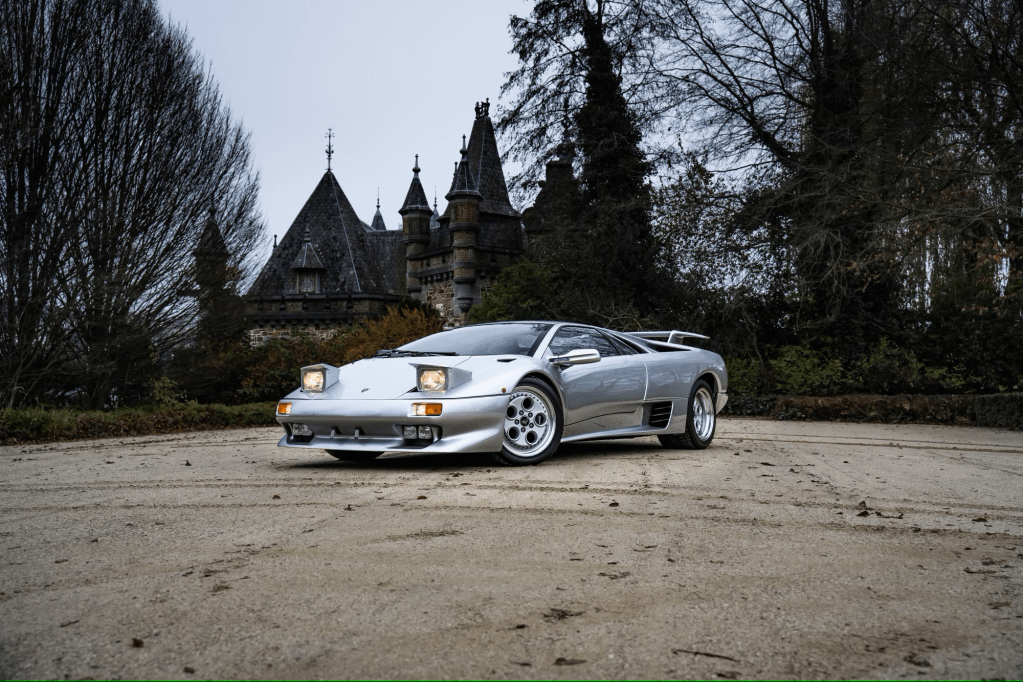
We’re back, with the second installment of our brief history series on Automobili Ferruccio Lamborghini S.p.A., or Lamborghini for short.
We left you with the heartbreaking departure of Ferruccio Lamborghini, who sold his entire stake by 1974 and retired to a lake in Perugia.
We covered the very foundations of the company, a verbal tussle with Enzo Ferrari, Lamborghini’s very first product, the 350GT, the majestic Miura that followed, plus a host of other V12-powered GT models and the launch of the insane Countach just before he left.
And to think that that was just Part I.
So what’s next, I hear you ask…

Crisis after Crisis after… Countach
Yeah, the 1970s were a…erm, tricky time, especially if you were making luxury vehicles. 1973 brought an oil crisis to the entire world thanks to a war that engulfed huge chunks of the Middle East, destabilising an awful lot.
Lamborghini were affected more than most, with spiralling oil prices and high employment forcing people to minimise gas usage and cut back on spending. When this happens, V12-powered luxury GTs and supercars just don’t seem practical.
In Italy it got even worse, with a huge rise in far-left and far-right organisations orchestrating high profile kidnappings and bombings across the country. There was a strong anti-elite sentiment that, naturally, suppressed the desire of the few to purchase items such as those produced by Lamborghini.
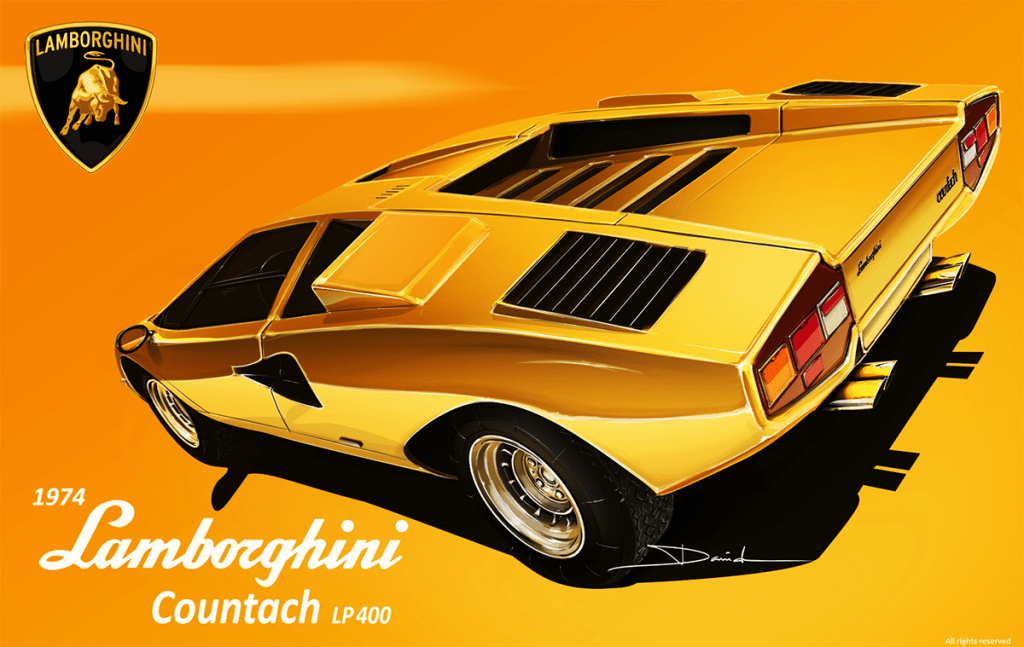
Which is why we have to be increasingly grateful to the Sant-Agata marque for the launch of the Holy Shit Countach.
Originally schedule for launch in 1972, financial concerns, as mentioned previously, delayed it. And despite the global economic situation, build delays and slightly underpowered engine, it stunned the automotive industry and 157 units were shipped before 1978, when the LP400 S was launched.
An inability to directly enter the US market due to not meeting safety or emissions regulations meant the volumes could’ve been much higher, a gaping error Lamborghini repeated in their biggest market with the Urraco replacement that followed.

Shady Decisions
The year 1976 marked a pivotal moment for Lamborghini. The Geneva Auto Show witnessed the unveiling of the Silhouette P300, a novel Bertone-designed sports car. Sleek, low-slung and compact, it should’ve been as popular as a Panettone at Christmas. It was not.
Two doors, mid-engined and rear wheel drive, it was a driver’s car at a time when people simply couldn’t justify buying something that didn’t offer much beyond going quickly around corners. Just 54 were sold in a four-year run.
And its shocking sales left the company still grappling with financial difficulties. Difficulties they themselves had created.
Then Lamborghini made two, additional, highly-questionable decisions.
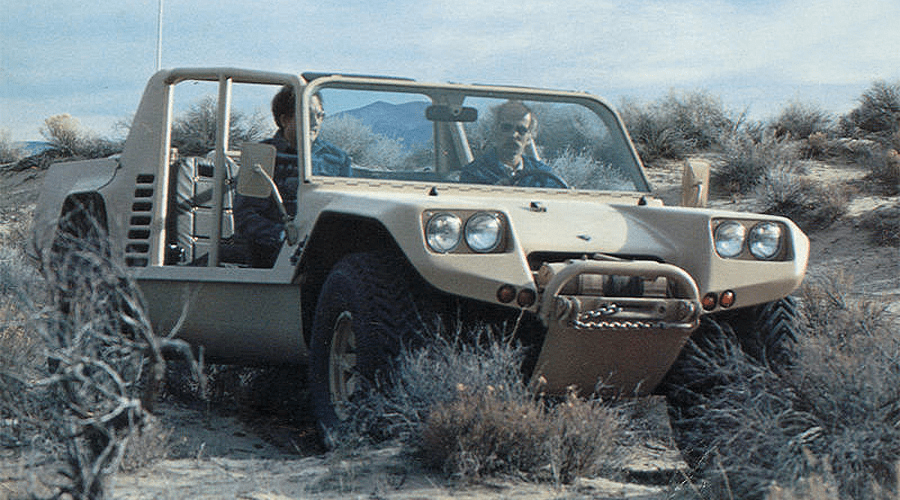
The first one resulted in the creation of the Cheetah. The second resulted in its downfall.
But we’ll start with the positive.
In search of additional funds, Lamborghini negotiated a contract to support the development of a new, all-terrain vehicle for the US military. Why, we’ve no idea, other than financial desperation we assume.
The chassis and underpinning were developed with a partner in San Jose, California, before being shipped to Sant’Agata for the remaining work, then onto Geneva for its debut at the 1977 Motor Show.
And that’s as far as it got. A combination of a rear-mounted 5.9L Chrysler V8 resulted in underwhelming performance and terrible dynamics, thanks also in part to its… chubbiness, shall we say. It weighed over 4500lbs (2 tonnes).
A quick demonstration for the US military was enough for them to award the contract to the Humvee instead, which is still going to this day. And it was also enough for BMW, who had contracted Lamborghini to help them develop what would go on to be the M1, to cancel the contract, seeing as Lamborghini had used the funds to develop the Cheetah. Shambles.

On the Brink-smanship
By 1978, Lamborghini found itself teetering on the edge of financial collapse. Internal conflicts and mounting debts pushed the company towards bankruptcy. Just as all hope seemed lost, the Mimran brothers, Swiss entrepreneurs with a deep passion for luxury automobiles, stepped forward to acquire the struggling Italian marque.
This marked the beginning of a brief, but remarkable, turnaround for Lamborghini.
Patrick Mimran, the visionary leader of the Mimran brothers, took the helm as CEO in 1980. Recognizing the company’s rich heritage and immense potential, he poured significant resources into revitalizing the brand. This included renovating production facilities, attracting top talent and investing heavily in research and development.
One of the first fruits of these labours was the 3.5L V8 Jalpa, introduced in 1978. This mid-engined sports car was built upon the foundation of the Silhouette but incorporated several key refinements. The engine, meticulously crafted by the legendary Maserati engineer Giulio Alfieri, delivered a smoother and more powerful performance, while the overall design was a little more elegant, if nothing else.
The timing was right too, with the 1970s in the rear-view mirror. Lamborghini were getting closer to their dream of an “affordable” sportscar.
Then 1982 arrived with more good news…
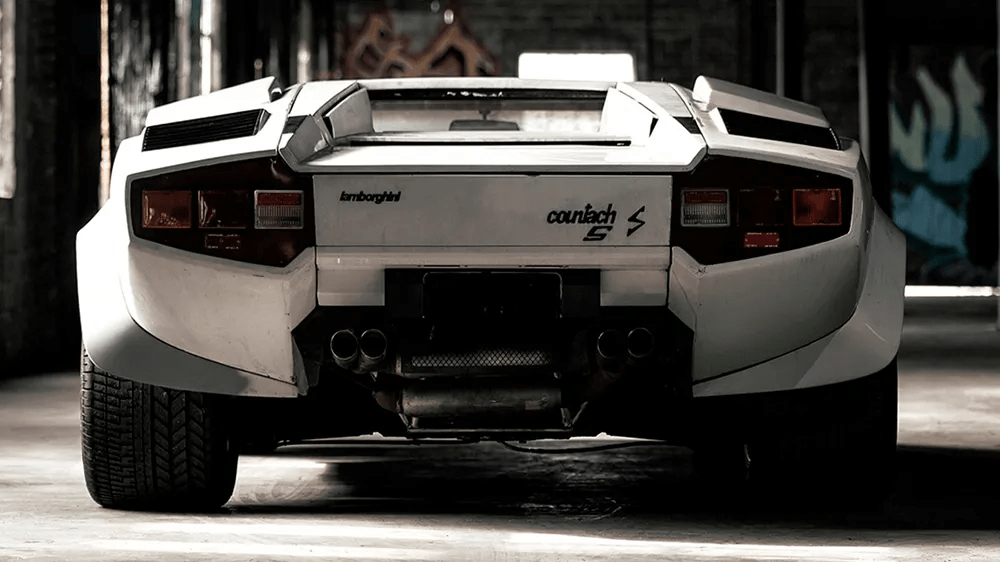
It was the LP 500S, an updated version of the Countach that retained the iconic wedge-shaped design and awe-inspiring scissor doors but featured a number of improvements that enhanced its performance and drivability.
It was, even more importantly, the first Countach to enter the United States of America properly, through the front door with a smile on its face and all standards met.
It was powered by a 4.8-liter V12 engine that the beast had been waiting for. This powertrain, coupled with a more responsive chassis and improved suspension, saw 321 people give it a home in the space of just 3 and a half years. Progress.

Not content with resting on its laurels, Lamborghini continued to push the boundaries of design and performance with the Countach LP5000 QV, introduced in 1985. This evolution of the legendary model boasted a more powerful 5.2-liter V12 engine with 4 valves per cylinder (Quattro Valvole) and a rather frightening 455 horsepower. There were also significant aerodynamic improvements and a revised suspension system.
660 were sold in 4 years. Yeah, you read that right.
So things were going well, really well in fact. It was almost as if this Mimran chap knew what he was doing.
And even more good stuff was on its way…
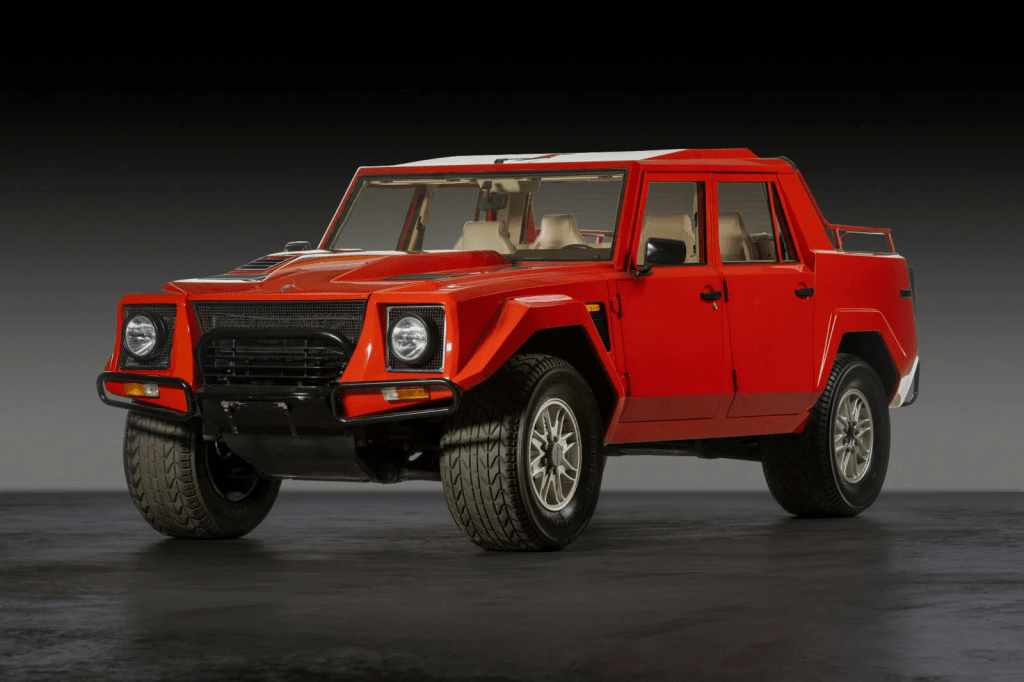
Seriously Unexpected Vehicle
In 1981, determined to not give up on the nucleus of the idea that had led them down the route of the Cheetah’s development, they developed the LM001 and debuted it in Geneva in 1981. To muted responses.
They tried again, but this time threw out the rear-mounted Chrysler V8 and stuck the Countach’s V12 in the front. Now we’re talking. This prototype gained 500kg to support the new powertrain, was christened the LMA002 and debuted in Geneva in 1982… to curious glances.
Progress (there’s that word again).
Having finally found a product offering and orientation in the SUV space that felt plausible, they went hard on the prototype model, making a raft of further changes and testing it to its limits. It was eventually given a serial number, LM002, debuted in Brussels in 1986 and became the very first production SUV by Lamborghini.
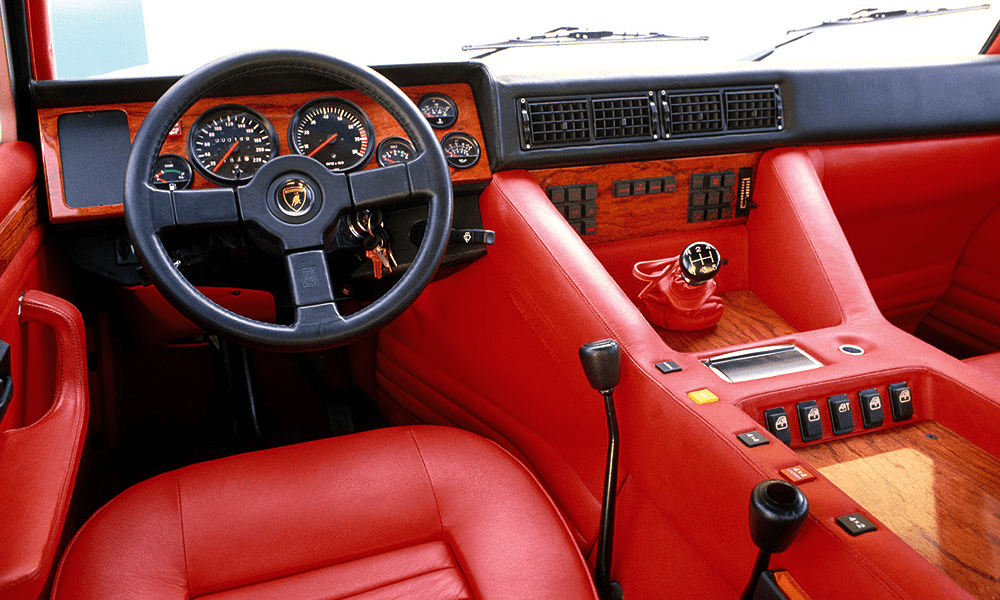
In fact, you can very easily call this behemoth of a vehicle the world’s first true “Super Utility Vehicle”, if not the true definition of a “Sports Utility Vehicle” (SUV).
It could house 11 people (yeah, really), came with full leather trim, tinted power windows, air conditioning, a premium stereo mounted in a roof console and an ability to switch between all wheel and rear wheel-only drive. it was even possible to spec one with the L804 type 7.2 litre marine V12, more commonly found in class 1 offshore powerboats. What?!
In total, despite Lamborghini’s claims of an order book 800 signatures long, a total of 301 examples were made before they pivoted to more profitable models.
They’d done it again.
Devil May Care
The Sant’Agata-based firm were getting cocky. With money in their pockets and ideas in their heads, they began pushing boundaries further, starting with prototypes.
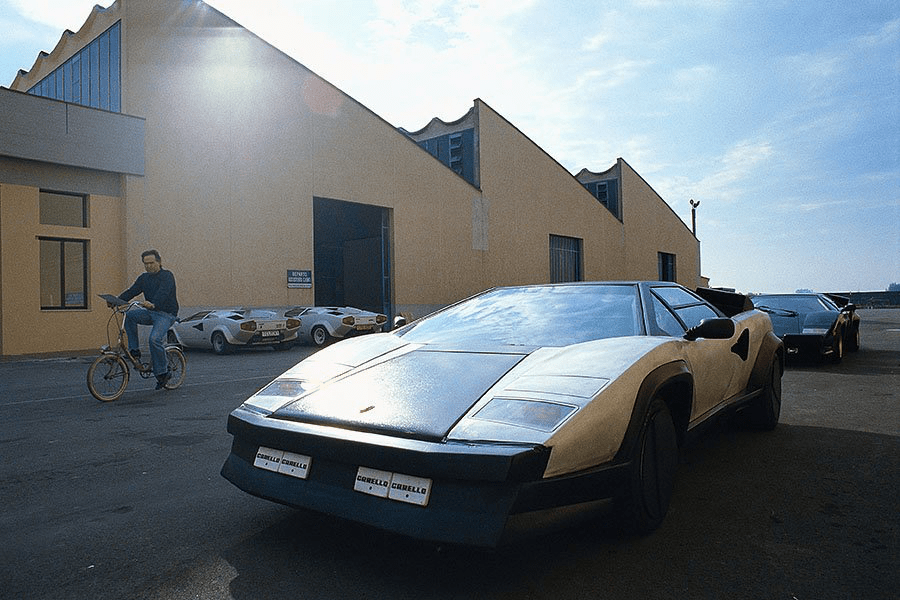
First up was the Countach Evoluzione, a prototype crafted almost entirely from carbon fiber.
Whilst on the outside it looked damn close to the Countach 5000 QV, it was an entirely different story underneath. The engineering team, led by Giulio Alfieri and a certain Horacio Pagani in the early stages of his career, were given free rein and it showed.
A carbon fibre monolithic shell was used for the main structure, with extensive use of sandwich-laminated aluminium, kevlar and honeycomb carbon fibre-reinforcements, plus body panels that also utilised the still-novel material.
By the time it was ready to be shown, it weighed less than a tonne, around 500kg less than the vehicle from which it was derived. Though it remained a prototype, Lamborghini learned shed-loads, as we’ve seen in recent years.

The second such prototype, the origins of which began in 1985, went by the name of Diablo and was an entirely different study to the Evoluzione.
Though the naming strategy for production cars hadn’t always followed Ferruccio’s blueprint, the Diablo was named after a ferocious bull raised by the Duke of Veragua in the 19th century, famous for fighting an epic battle with ‘El Chicorro’ in Madrid on 11 July 1869. And considering the ambitions of the project, the name was logical.
It was to be the first Lamborghini to breach 315 km/h (196 mph), and therefore be the fastest production car win the world.
The prototype progressed well, with the legendary Gandini taking charge of the various exterior prototype designs up for discussion. It got as far as the P132, featured above, when something suddenly changed.

Chrysler & Complications
In 1987, the Mimran brothers sold Lamborghini to Chrysler for a reported $25.2 million.
Though out of the blue, the Mimrans were astute businessmen, demonstrated not only by the businesses they’d started from scratch, but also by their turnaround of Lamborghini itself.
It was now the turn of the legendary Lee Iacocca to see just how far he could take the brand. And he had big ambitions.
For the very first time, Lamborghini were part of a much larger automotive conglomerate, and Iacocca was keen to leverage this. With its vast resources and established global network, Chrysler and Iacocca saw Lamborghini as a key player in its strategy to enter the “extra premium” sports car market. With an estimated market of 5,000 cars per year worldwide, they envisioned a future where Lamborghini would compete directly with the likes of Ferrari.
And that’s where the Diablo came in.
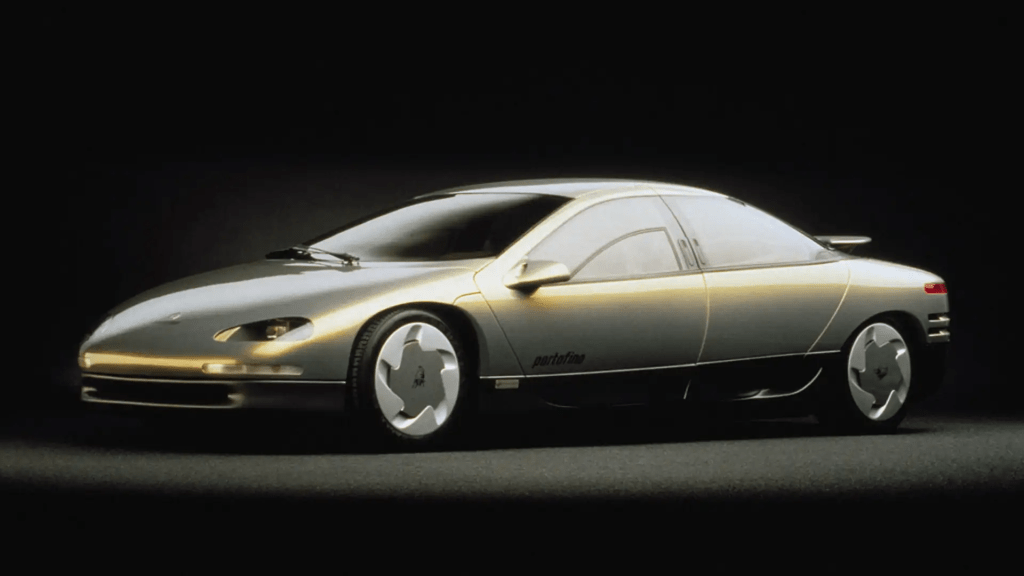
Yeah, thank F…erruccio that’s not the Diablo above, but it could have been, if Chrysler had had their way.
Iacocca and his team admired the vision for the Diablo a lot, but not the visual execution. They wanted smoother, less aggressive edges, and so commissioned their own design team to take control.
Despite initial concerns from Lamborghini executives, Chrysler unveiled the Portofino prototype at the Frankfurt auto show. While met with stinging feedback from the press, it did at least go on to influence several subsequent Chrysler designs.
So it was back to the drawing board, and with Lamborghini execs growing increasingly angry, a compromise was found for the remaining development of the Diablo. Though the exterior remained in the hands of Tom Gale and his team, much to the chagrin of Gandini, Lamborghini took control of the rest.
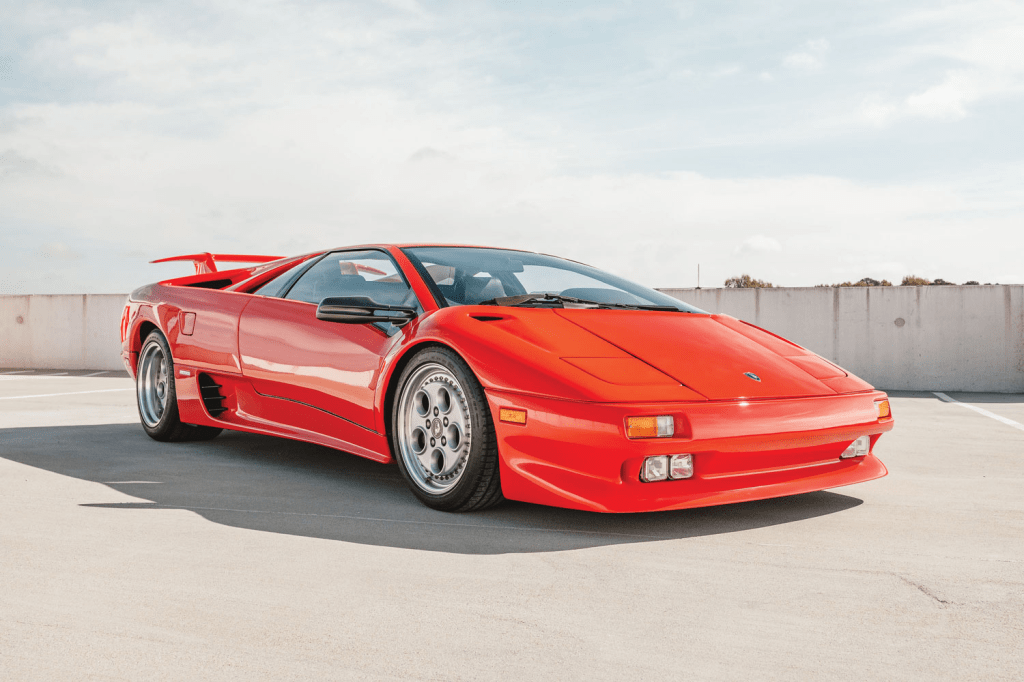
El Diablo
And this was the result. A 5.7L dual overhead-cam, V12-powered monster with a 0-62mph (100kmh) time of 4.5 seconds, 0-99mph (160kmh) in 9.3 seconds and a top speed of just over 200mph, comfortably achieving its target.
The Diablo was officially unveiled on 21 January 1990, to huge acclaim. And that acclaim quickly turned into commercial success.
It was handsome, pretty, queen of New- sorry, it’s that time of year.
But it was. It was lightening quick, achingly cool and, after all, a Lamborghini, so it was also as refined as anything else available.
And though spartan in its offerings, the options list was huge, including electric windows, rear wing (and it looks soooo good), a factory fitted luggage set (priced at $2,600) and an exclusive Breguet clock for the dash. But with a starting price of $239,000 (not in modern money terms!), this was not cheap.
Which makes it’s sales success even more remarkable.

In its first cycle, pre-1999 refresh, the Diablo found over 2000 homes. And no, I didn’t accidentally add a zero.
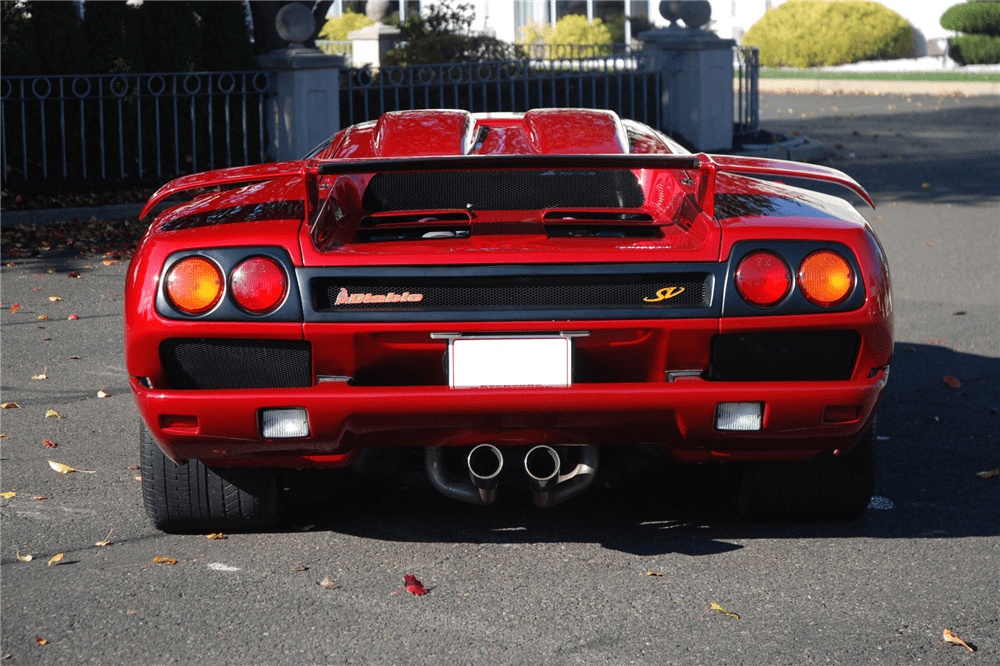
Later derivatives included the VT, in 1993, which added all-wheel drive, exterior tweaks for cooling, a vastly improved interior and power steering, whilst the SE30 variants received a power boost to a bonkers 530PS and shed over 250 lbs in weight. The units were limited to 150 in total, with 10% set aside for the insane Jota variant, which saw power taken all the way to 603PS.
A Super Veloce (SV) and Roadster variant also followed, Lamborghini keen to take advantage of the base car’s popularity.
Yet once again Lamborghini had screwed up, because it still hadn’t been designed with the US in mind. Despite having turned a profit in 1991, with Chrysler using the vast US dealer network to ease the “grey market” transactions with dealer and warranty support, plus broadening the V12’s access to powerboat markets, by 1992 things had begun to slide and by the middle of 1993, Chrysler had lost patience.
They were ready to sell Lamborghini. Déjà vu?
Rudderless
In 1994, after a series of disagreements with Lamborghini executives, Chrysler sold the company to an Indonesian conglomerate for $40 million, but at least included the race engine manufacturing and USA dealer network.
This marked yet another tumultuous period for Lamborghini, characterised by a lack of direction, product or otherwise..
In fact, between 1994 and 1998, with the exception of the superb Diablo SV, a combination of messy attempts to combine with other companies, a merry-go-round of management, ownership changes and misguided prototypes rendered the company a near mess.
With Michael J. Kimberly, formerly of Lotus, Jaguar and General Motors, appointed to lead the struggling Italian marque, his first priority was to expand the product lineup, including raising the brand’s presence in the US through dedicated marketing campaigns that emphasised its heritage.

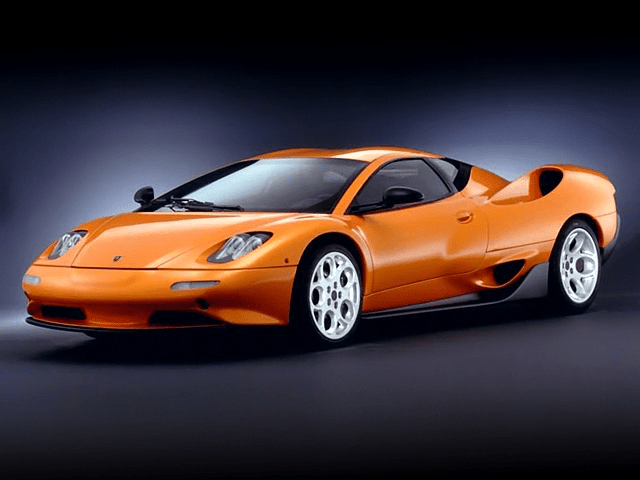
But on the product development front, all that really changed was a ramp up of useless prototypes, with the Calà debuting in 1995 as a long-term, but failed, attempt to revive the Jalpa. In 1997, there were two design studies presented as the Diablo’s successor, one penned by Andrea Zagato, the other by Gandini. Yet neither were that well received and the Diablo was still doing well. They were targeting the wrong products.
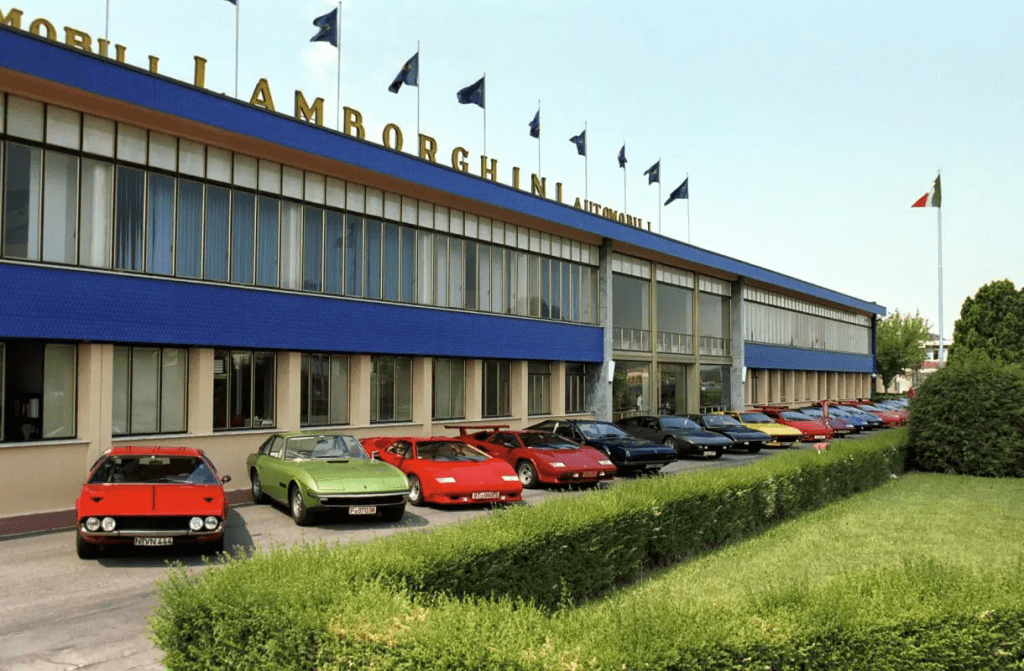
Amidst this chaos, one man came to the fore: Vittorio di Capua. Appointed president and CEO in 1996, di Capua, a veteran of Fiat with over 40 years of experience, brought much-needed stability to the company. He implemented aggressive cost-cutting measures, streamlined production and finally led Lamborghini to profitability in 1997.
Di Capua recognized the immense potential of the Lamborghini brand and successfully leveraged it through strategic merchandising and licensing deals. In 1997, Lamborghini finally passed its break-even point, selling 209 cars, thirteen more than it needed to be profitable. Di Capua also leveraged the Lamborghini name and identity, implementing aggressive merchandising and licensing deals. Development of the “baby Lambo” finally began, moving forward with a US$100 million budget.
A Change is as Good as a…
Then in 1998, with much of Asia experiencing a financial meltdown, the Piech family, head of Volkswagen AG, went on a spending spree and purchased Bugatti, Bentley… and Lamborghini. With luxury carmakers struggling, he orchestrated a daring move that would forever alter the automotive landscape.
These companies, each with a rich heritage and passionate following, were struggling financially due to the economic downturn. Piëch saw a chance to not only add prestige to Volkswagen but also to create a formidable luxury car division.
It was also a huge opportunity to consolidate engineering capabilities and experience, something every brand in the Volkswagen stable could benefit from.
But have they?
***
Well for that answer, you’ll have to wait for Part III.
We hope you’ve enjoyed the Lamborghini story so far, and believe us when we say that there’s still more to come.
Please feel free to subscribe below to avoid missing out on future articles, and continue exploring our site for the very best from the automotive archives.
 Cars Less Traveled
Leave a comment